
Think you need to spend hours watching YouTube tutorials, saving TikToks and taking online courses to become a better content creator?
Not necessarily.
Some of the best content creation lessons can come from books, magazines, conversations, events, observation and simply being out in the real world.
In fact, if you only learn content creation by looking at other people’s content, you may end up creating content that looks like everyone else’s.
A better approach is to learn how people think, communicate, tell stories and make decisions — then bring those lessons back into your content.
Where Can You Learn Content Creation?
Content creation is a skill that can be developed through several learning routes:
- 📱 Online content — YouTube, social media, blogs and podcasts
- 📚 Books — storytelling, psychology, copywriting, branding and marketing
- 🏛️ Libraries — physical books, eBooks, magazines, newspapers and learning resources
- 👥 People — conversations, mentors, colleagues and other creators
- 🎤 Offline events — talks, workshops, exhibitions and networking sessions
- 👀 Observation — studying advertisements, shops, packaging, posters and customer behaviour
- ✍🏻 Practice — writing, filming, editing and publishing regularly
- 🔎 Research — understanding what audiences actually search for and care about
The important part is not choosing one method.
It is building a learning system where different sources teach you different parts of the craft.
What Does It Mean to Learn Content Creation?
Content creation is more than knowing how to use Canva, CapCut, a camera or Instagram.
At its core, content creation involves several skills:
1. Storytelling
Learning how to turn an ordinary topic into something people want to read, watch or share.
For example:
“We opened a new café.”
can become:
“We spent three months trying to create a café that feels like someone’s living room.”
The second version gives people a reason to care.
2. Copywriting
Learning how to communicate an idea clearly and persuasively.
This includes:
- Headlines
- Hooks
- Captions
- Calls to action
- Product descriptions
- Website copy
- Short-form scripts
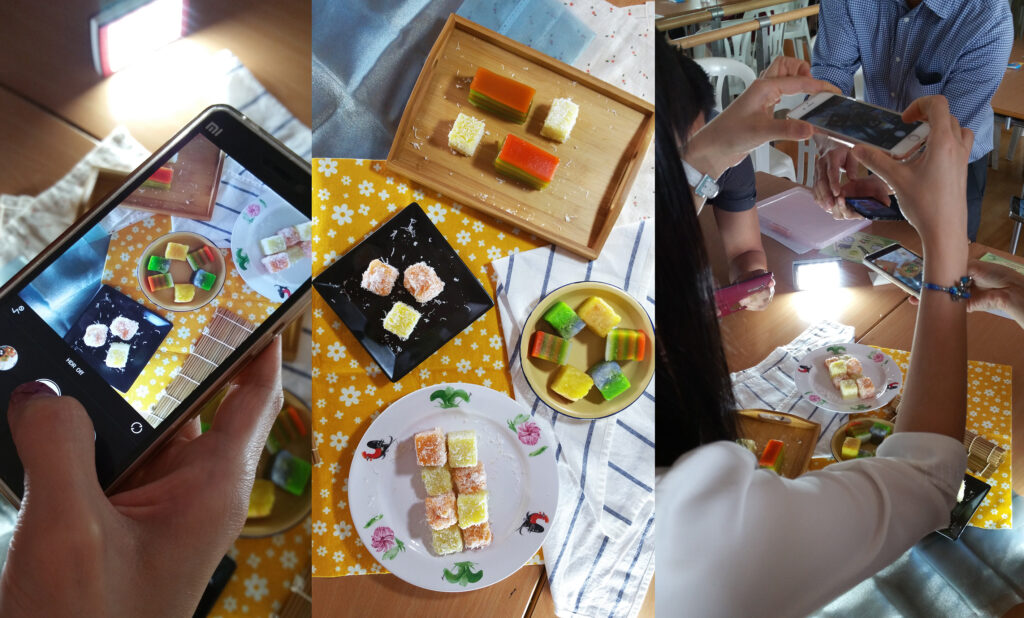
3. Visual Communication
Understanding:
- Composition
- Photography
- Typography
- Colour
- Layout
- Video pacing
- Thumbnails
- Branding
4. Audience Psychology
You need to understand why someone stops scrolling, continues reading, saves something or decides to buy.
This is where books about psychology, consumer behaviour and marketing can be surprisingly useful.
5. Research
Good creators are often good researchers.
They know how to:
- Find information
- Ask better questions
- Identify trends
- Compare sources
- Spot recurring customer concerns
- Turn research into useful content

Why You Shouldn’t Learn Content Creation only Online
Online learning is convenient, but it can create a strange problem.
You start learning content creation by consuming content created by other content creators.
Then you see:
“5 hooks that go viral”
“3 Reels formulas”
“Use this exact caption structure”
“Post at this time”
And eventually, everyone’s content starts sounding the same.
Offline learning gives you something different: raw material.
A book might teach you how humans respond to stories.
A newspaper might show you how journalists construct headlines.
A magazine might show you how an editor builds an entire visual experience.
A conversation with a business owner might reveal a customer problem you would never discover from social media.
That is where original ideas often come from.

1. Learn Content Creation Through Books
Books are one of the most underrated ways to learn content creation.
And you don’t necessarily need to buy them.
Instead of searching only for books titled “Content Creation”, look across related subjects:
Storytelling
Look for books about:
- Story structure
- Creative writing
- Screenwriting
- Journalism
- Memoirs
- Fiction
Marketing
Explore:
- Consumer behaviour
- Branding
- Advertising
- Digital marketing
- Customer psychology
Copywriting
Search for books covering:
- Persuasive writing
- Advertising copy
- Direct response
- Headlines
- Business writing
Psychology
This can help you understand:
- Why people make decisions
- What creates attention
- How habits form
- How people perceive value
- Why certain messages are memorable
Photography & Design
Explore:
- Composition
- Graphic design
- Visual storytelling
- Art direction
- Photography
The interesting part is that you don’t have to read a book specifically about Instagram to learn something useful for Instagram.
2. Learn for Free From NLB
If you’re in Singapore, don’t overlook the National Library Board (NLB) as a learning resource.
NLB’s OneSearch allows you to search across books, eBooks, magazines, articles, audiovisual materials, newspapers and other resources.
NLB also has a network of 28 libraries, with both physical and digital learning resources. Its digital collection includes eBooks, eMagazines, eNewspapers, courses and videos.
What should you search for?
Instead of searching only:
“Content creation”
try searching:
- “copywriting”
- “advertising”
- “storytelling”
- “social media marketing”
- “digital marketing”
- “consumer psychology”
- “branding”
- “photography”
- “graphic design”
- “video production”
- “journalism”
- “creative writing”
- “public speaking”
- “content strategy”
This widens your learning pool considerably.
NLB’s eResources also include platforms such as OverDrive, where members can borrow eBooks, audiobooks, comics and eMagazines through the NLB Mobile app.
NLB also provides access to PressReader, which contains thousands of newspapers and magazines from around the world.
That can be particularly useful for content creators because you can study how professional publications package information.

3. Read Magazines Like a Content Creator
Don’t simply read a magazine.
Dissect it.
Look at:
- The cover headline
- Article titles
- Opening paragraphs
- Photography
- Page layouts
- Captions
- Pull quotes
- Advertisements
- How stories transition from one section to another
Ask yourself:
Why did the editor put this here?
Why did this headline make me want to read?
What made me stop at this advertisement?
What information was revealed first?
This turns passive reading into content training.
4. Study Newspapers to Improve Your Headlines
Newspapers are particularly useful if you create:
- Blogs
- Social media captions
- News-style content
- LinkedIn posts
- Educational content
- SEO articles
Look at how a complicated story can be condensed into one headline.
Then practise.
Take a headline and write five different versions:
Straightforward:
How to Improve Your Content Creation Skills
Question:
Can You Learn Content Creation Without Taking a Course?
Curiosity:
The Content Creation Lessons You Won’t Find on TikTok
Contrarian:
You Don’t Need Another Content Creation Course
Local:
Where Singapore Creators Can Learn Content Creation for Free
That exercise alone can sharpen your headline instincts.
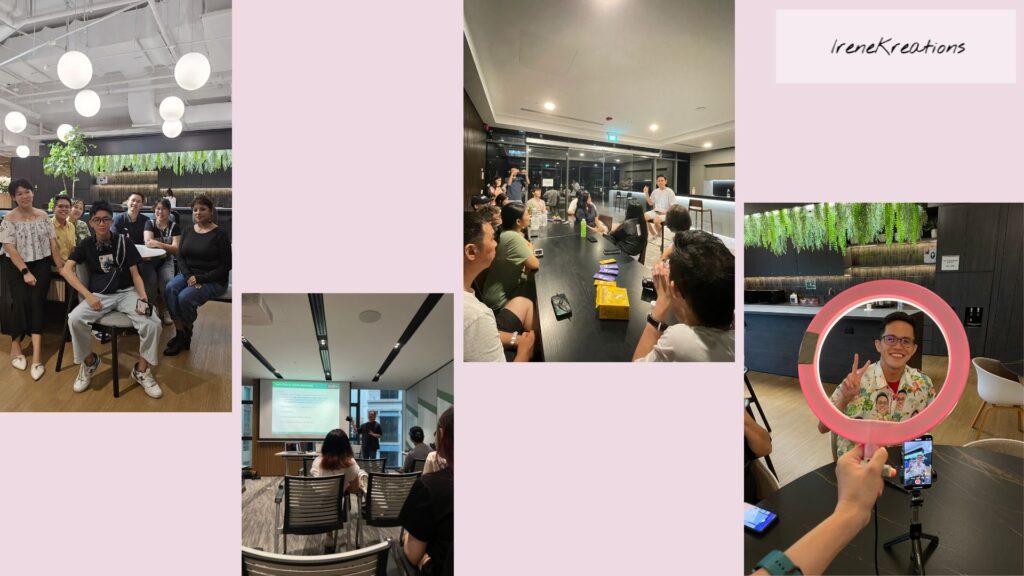
5. Learn Offline by Talking to People
One of the fastest ways to find content ideas is to stop looking at your screen.
Talk to:
- Community
- Customers
- Business owners
- Friends
- Colleagues
- Salespeople
- Designers
- Photographers
- Entrepreneurs
- Retail staff
- Other creators
Ask simple questions.
For example:
“What do customers ask you most often?”
“What do people usually misunderstand about your product?”
“What made you choose this business?”
“What is something customers only realise after buying?”
Those answers can become content.
And unlike generic trend-based content, they are based on real human questions.
6. Learn by Observing the Real World
You can practise content creation almost anywhere.
Go to a shopping mall.
Look at:
- Storefronts
- Posters
- Digital screens
- Packaging
- Menus
- Promotions
- Product displays
- Signage
Then ask:
What is this brand trying to make me notice first?
A restaurant menu is essentially a piece of content.
A billboard is content.
A product package is content.
A shop window is content.
A sales pitch is content.
You are surrounded by examples.
The skill is learning to notice them deliberately.
7. Attend Offline Talks, Workshops and Events
Don’t underestimate physical events.
A workshop can teach you something a tutorial cannot: interaction.
You can:
- Ask questions
- Hear different perspectives
- Meet practitioners
- See demonstrations
- Discuss real problems
- Learn from other people’s mistakes
NLB also runs programmes and learning activities through its library network, alongside its physical and digital resources.
So learning content creation doesn’t have to mean paying for an expensive course.
Sometimes the better starting point is:
borrow → attend → observe → practise.
8. Learn by Creating Without Publishing
Here’s an underrated exercise.
Create content that nobody will see.
Write:
- 10 headlines
- 5 Instagram captions
- 3 short video scripts
- 1 blog article
- 10 hooks
- 5 product descriptions
Don’t worry about likes.
Don’t worry about followers.
Don’t even publish it.
The goal is to develop your creative muscles without constantly asking:
“Will people like this?”
Once you’re comfortable creating privately, publishing becomes less intimidating.
9. Build Your Own Content Swipe File
Whenever you see something good, save it.
But don’t just save it because you like it.
Write down why you like it.
For example:
Headline:
“What nobody tells you about…”
Why it works:
Creates curiosity.
Visual:
Close-up before-and-after.
Why it works:
Makes the outcome immediately obvious.
CTA:
“Would you try this?”
Why it works:
Easy question requiring little effort to answer.
Over time, you’ll build your own reference library.
Not a collection of things to copy — a collection of patterns to understand.
10. Combine Online + Offline Learning
The strongest approach is not:
Online vs offline.
It’s:
Online + offline + practice.
For example:
Monday — Online
Watch one tutorial about storytelling.
Tuesday — Book
Read one chapter about storytelling or copywriting.
Wednesday — Observation
Study five advertisements.
Thursday — People
Ask someone about a problem they frequently encounter.
Friday — Practice
Turn what you learned into three pieces of content.
Weekend — Review
Ask:
- What worked?
- What sounded unnatural?
- What caught my attention?
- What would I change?
That’s a much more sustainable learning system than endlessly consuming tutorials.
Examples: A Simple Content Creation Learning Path
If you’re starting from zero, try this:
Beginner
Focus on:
- Writing
- Storytelling
- Basic photography
- Basic video
- Social media fundamentals
Intermediate
Move into:
- Copywriting
- Consumer psychology
- Branding
- SEO
- Content strategy
- Analytics
Advanced
Explore:
- Brand strategy
- Audience research
- Conversion writing
- Editorial strategy
- Creative direction
- Content distribution
- Search intent
The important thing is not to rush into advanced tactics before learning how to communicate clearly.
FAQ: Learning Content Creation
Can I learn content creation without taking a course?
Yes.
Courses can provide structure, but they aren’t the only way to learn. Books, libraries, free online resources, observation, conversations, workshops and consistent practice can all build useful content skills.
Can I learn content creation for free in Singapore?
Yes. NLB provides access to physical and digital learning resources, including books, eBooks, magazines, newspapers and learning resources.
You can start with NLB’s OneSearch and search across its available collections.
What books should I read to become a content creator?
Don’t limit yourself to “content creation” books.
Try books on storytelling, copywriting, advertising, psychology, branding, journalism, photography and creative writing.
These subjects develop the underlying skills that good content requires.
Is reading books better than watching YouTube?
Neither is automatically better.
YouTube can demonstrate a technique quickly. Books can provide deeper context and different perspectives.
The best approach is to learn the concept, then practise it.
How can I learn content creation offline?
Try:
- Reading books and magazines
- Attending workshops
- Talking to customers and business owners
- Studying advertisements
- Visiting exhibitions
- Joining creative communities
- Observing how businesses communicate
- Writing without publishing
- Taking your camera outside
- Reviewing your own work
Where can I find free content creation books in Singapore?
Start with NLB’s catalogue and OneSearch. Search broadly for subjects such as copywriting, advertising, storytelling, branding, photography and marketing rather than only “content creation.”
Can NLB help me learn digital marketing too?
Yes. NLB’s digital resources include eBooks and learning resources, while its broader eResources collection includes databases and platforms covering business and professional development.
What should I learn first: video editing or content strategy?
Start with communication and audience understanding.
A beautifully edited video with nothing meaningful to say is still weak content.
Learn the message first. Then learn how to package it.
How do I get better at creating content if I have no ideas?
Stop asking only:
“What should I post?”
Instead ask:
“What are people confused about?”
“What questions do customers keep asking?”
“What do people disagree about?”
“What do beginners misunderstand?”
“What have I personally learned recently?”
These questions usually produce better content ideas.
Is offline learning still useful when content creation is digital?
Absolutely.
Digital content is ultimately consumed by people, not algorithms.
Understanding people, stories, design, language, psychology and culture remains valuable regardless of the platform.
Conclusion: Become a Better Observer, Not Just a Better Scroller
Learning content creation doesn’t require you to constantly consume more content.
Sometimes, the best thing you can do is close the app and open a book.
Visit a library.
Read a magazine.
Study an advertisement.
Talk to a stranger.
Attend a workshop.
Take photographs.
Write something nobody will see.
Then come back online and turn those experiences into something useful.
For Singapore creators, NLB is an especially practical place to start because its resources extend beyond physical books to eBooks, magazines, newspapers, databases and other digital learning materials.
The real advantage isn’t having access to more information.
It’s learning how to notice things that other people overlook.
And that may be one of the most valuable content creation skills you can develop.