
Writing for social media isn’t just about words — it’s about how users read, interpret, and interact with your content.
Even the most insightful ideas can get lost if your post is cluttered, hard to read, or visually overwhelming. Poorly written social media content can frustrate readers, reduce engagement, and even damage your brand’s perception. On the other hand, writing the right way can make your posts more engaging, scannable, and enjoyable, improving the overall user experience (UX).
“Inconsistency is often an identity problem, not a skill problem.”
You could have the most beautiful visuals, a thoughtful product, and a strong mission—but if your social media writing misses the mark, your users notice. UX isn’t just about design; it’s about communication. Words guide perception, build trust, and shape experience.
Why Social Media Writing Matters for UX
Poorly written social media content creates friction for your audience:
- Confusion: Unclear captions, mismatched tone, or jargon can leave your audience unsure what your brand stands for.
- Disengagement: Posts that feel generic, stiff, or “salesy” lose attention quickly.
- Brand mistrust: Inconsistent voice signals lack of thoughtfulness—users may doubt your credibility.
- Wasted effort: Great visuals fail to convert if the writing doesn’t guide users to take action naturally.
“If marketing feels fake, you’re using someone else’s voice.”
Even the best social media strategy can backfire if writing doesn’t align with your brand essence.
What Small Business Owners Struggle With
Small business owners in Singapore face a unique challenge:
- Overloaded with tasks: Running operations leaves little time to reflect on messaging.
- Limited marketing knowledge: Courses often teach trends or tools—but not how to think strategically about your brand voice.
- DIY frustration: Copying other brands feels easy, but leads to inconsistent or shallow UX.
Why Social Media Writing Impacts UX:
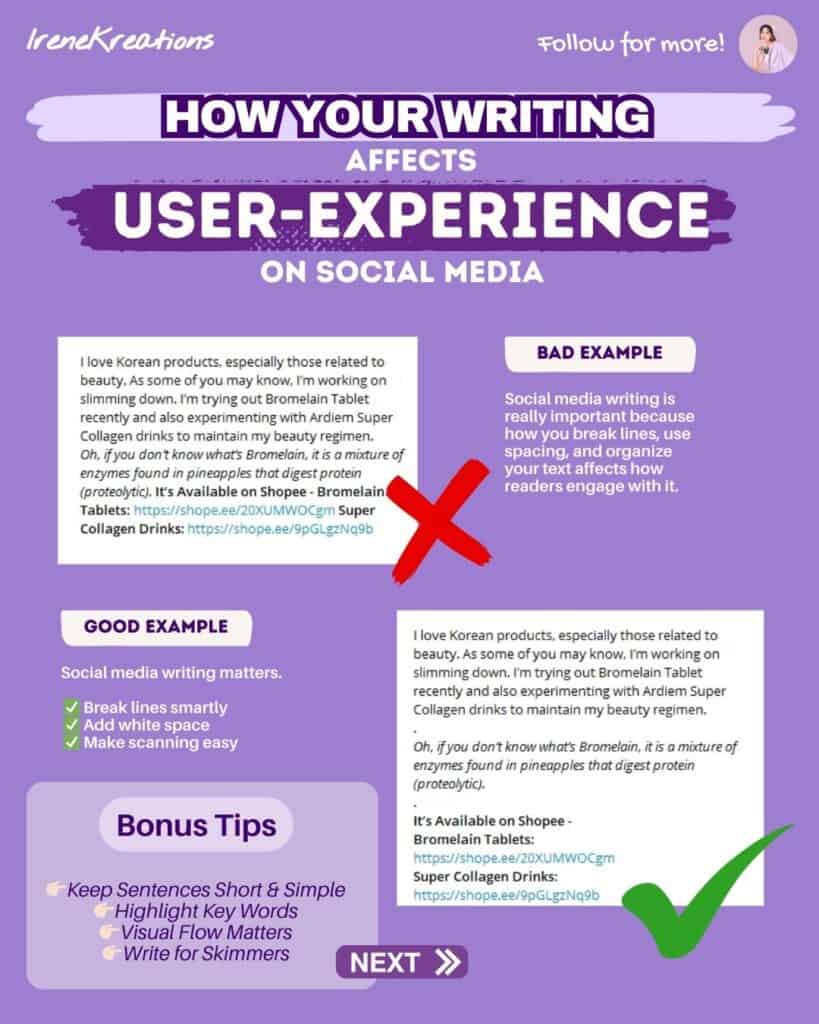
Social media is different from traditional writing. Users rarely read every word. They scan for value, clarity, and visual appeal. If your content is dense, confusing, or unstructured, readers may quickly scroll past without engaging. Here’s what often goes wrong:
- Long, Dense Paragraphs
Walls of text are intimidating. Without breaks, readers get fatigued and may leave before reaching your main point. - Overloaded Sentences
Packing too many ideas into a single sentence makes it difficult to follow. Complex words or jargon can alienate your audience. - No Visual Cues
Without bullets, bold text, or emojis, scanning becomes harder. Users can’t quickly pick up the key points. - Weak Hook & CTA
If your opening isn’t attention-grabbing or your call-to-action isn’t clear, readers are unlikely to stay or engage.
Many courses and workshops only teach what they want you to know—posting hacks, AI tools, or generic templates—leaving gaps in brand clarity and UX understanding.
How to Write the Right Way:
1. Hook Readers Immediately
- Start with a bold statement, question, or curiosity-driven phrase.
- Example: “Scrolling past yet another boring post? Here’s how to make your writing pop!”
2. Use Breaklines & White Space
- Break paragraphs into 2–3 lines.
- Leave space between blocks of text.
- Helps readers scan and digest information faster.
3. Keep Sentences Short & Simple
- One idea per sentence.
- Avoid jargon unless your audience expects it.
- Example: “Long paragraphs lose readers. Short ones keep them engaged.”
4. Highlight Key Points
- Use bullets, emojis, or bold text to emphasize important info.
- This helps skimmers quickly pick up your message.
5. End With a Clear CTA
- Tell readers exactly what to do next: “Save this tip for your next post” or “Share if you agree!”
- A clear CTA increases engagement and provides direction.
6. Mind the Visual Flow
- Left-aligned text and high-contrast colors improve readability.
- Think of the post as a mini-landing page — easy to scan and digest.
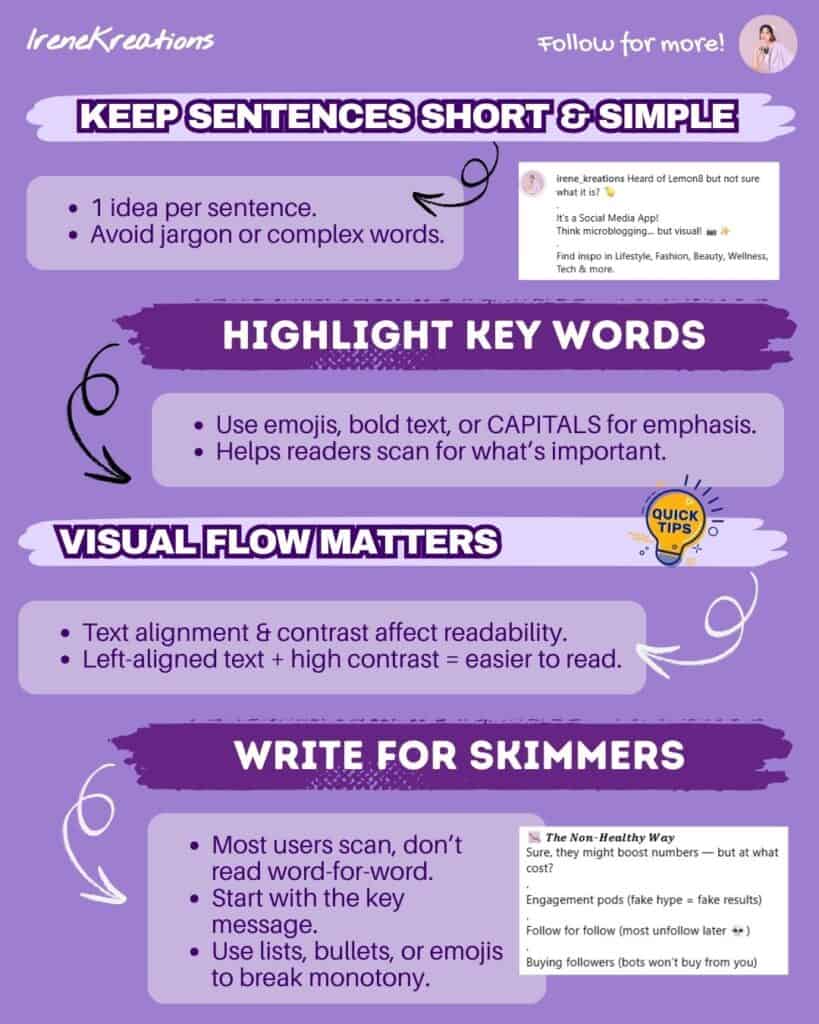
Wrong vs Right
Wrong:
“Social media writing is really important because if you don’t structure your text well, use breaks, or think about how people read, then your readers may get bored and not engage, which is why UX is affected.”
Right:
“Social media writing matters!
✅ Break lines smartly
✅ Use bullets & emojis
✅ Keep sentences short
✅ End with a clear CTA
Better writing = happier readers & more engagement.”
Writing for social media is about clarity, brevity, and visual flow.
When done poorly, it frustrates readers and diminishes engagement. When done right, it guides readers effortlessly, makes your content enjoyable to scan, and encourages interaction.
At IreneKreations, we guide business owners to write with purpose and alignment, so every post enhances UX. We teach:
- How to think critically about content, not just write it.
- How to create systems for sustainable posting without burnout.
- How to maintain emotional and tonal alignment, even when scaling content.
“Handing over your brand shouldn’t feel like giving up your voice.”
Top 5 Ways IreneKreations Stands Out
- Brand essence first: We clarify who you are before creating content.
- Focus on credibility: Building trust over chasing visibility.
- Tone-sensitive guidance: Every message feels aligned, safe, and respectful.
- Realistic workflows: Systems built for your time, energy, and capacity.
- Pre-trend insight: As an active agency, we spot shifts early to help clients stay ahead without chasing noise.
Why Upgrading Writing Skills Matters
Even if you know social media platforms or design basics, upgrading your writing skills:
- Increases clarity, confidence, and audience connection
- Reduces miscommunication and wasted effort
- Helps create a cohesive brand voice that supports long-term UX and trust 🌱
Coaching with IreneKreations empowers you to DIY without feeling lost, understand your audience, and write content that resonates, engages, and converts naturally.
People are also asking:
1. How does poor social media writing affect user experience?
Poor writing creates confusion, disengagement, and reduces trust. Micro-intent: social media writing impact UX Singapore, content clarity for SMEs Singapore.
2. Can I improve UX without hiring a marketing agency?
Yes. Coaching helps you craft aligned messaging while retaining your voice.
3. What mistakes should small business owners avoid in social media writing?
- Inconsistent tone
- Jargon-heavy language
- Over-reliance on templates
- Copying competitors blindly
4. How long does it take to see UX improvements after improving social media writing?
Most business owners notice better engagement and clarity within 2–4 weeks of consistent application.
5. Why do social media courses often fail SMEs in Singapore?
Courses teach tools or trends but often skip strategic brand thinking, audience alignment, and UX considerations.
By understanding the user experience, applying breaklines, emphasizing key points, and crafting clear calls-to-action, you can transform your posts from forgettable to unforgettable. Remember: social media writing isn’t just communication — it’s UX in action.
✧⭒✦✧⭒✦◇ Ready to Level Up Your Socials? ✦⭒✧✦⭒✧
Still struggling with messy marketing or feel lost on social media? It’s time to change that. Dive into IreneKreations’ Recommended Social Marketing E-Books — a curated library filled with FREE and premium guides crafted for business owners who want real, lasting results.
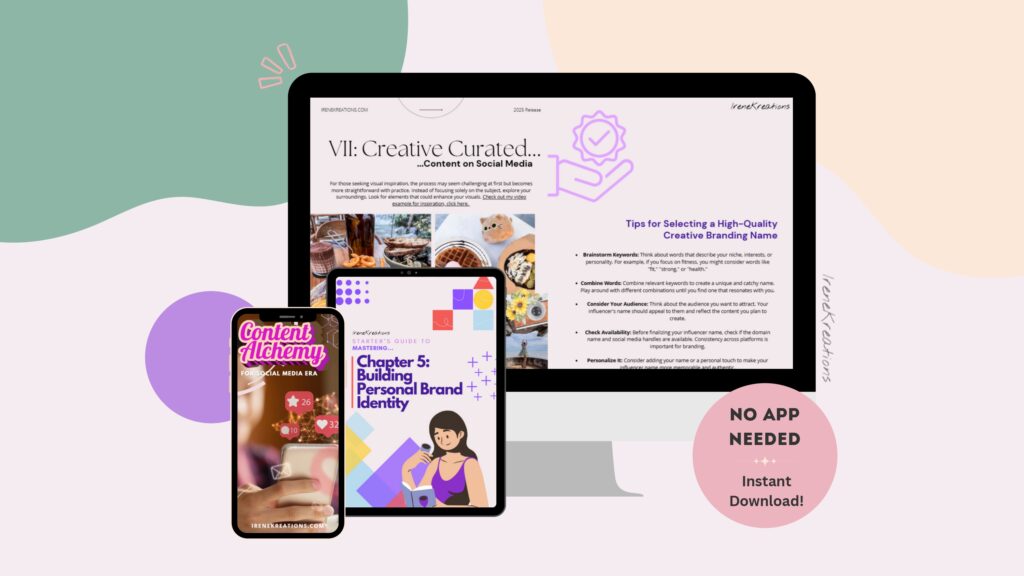
From social media to content strategy and branding, these resources are your shortcut to making marketing finally make sense (and work).
Instant access. Powerful strategies. Business-ready results.