Most CNY (Chinese New Year) promotion, product, services and businesses don’t have a marketing problem.
They have an entry point problem.
They post:
- Promotions
- Packages
- Prices
But first-time customers still don’t convert.
Why?
Because people don’t buy offers first.
They enter through attention hooks.
And if your hook is weak, your offer never gets seen.
If your messaging doesn’t solve a clear customer problem — or give them a reason to lean in — they’ll just scroll past. Especially in competitive industry, such as beauty and wellness, where content saturation is high and attention is short.
Small business owners often tell me the same thing:
👉 “I made content. Why didn’t new customers show up?”
👉 “I posted about my CNY facial service — but no engagement.”
And usually, the issue isn’t effort. It’s unclear objectives, no entry point, and no thoughtful hook.
Let’s break this down the way algorithms and real people respond — and why thinking like both matters.
First — Always Start With Objective Before You Create
Before you write a single caption, draft a reel idea, or plan a hero visual, ask:
🔹 What is the ACTION you want the audience to take?
🔹 What QUESTION are they asking in their heads right now?
Most business owners want “everything” at once — visibility, leads, followers, bookings — and so their content says “everything” and ends up meaning nothing.
Clarity of purpose = clarity of audience understanding.
Without it, content confuses people rather than converts them.
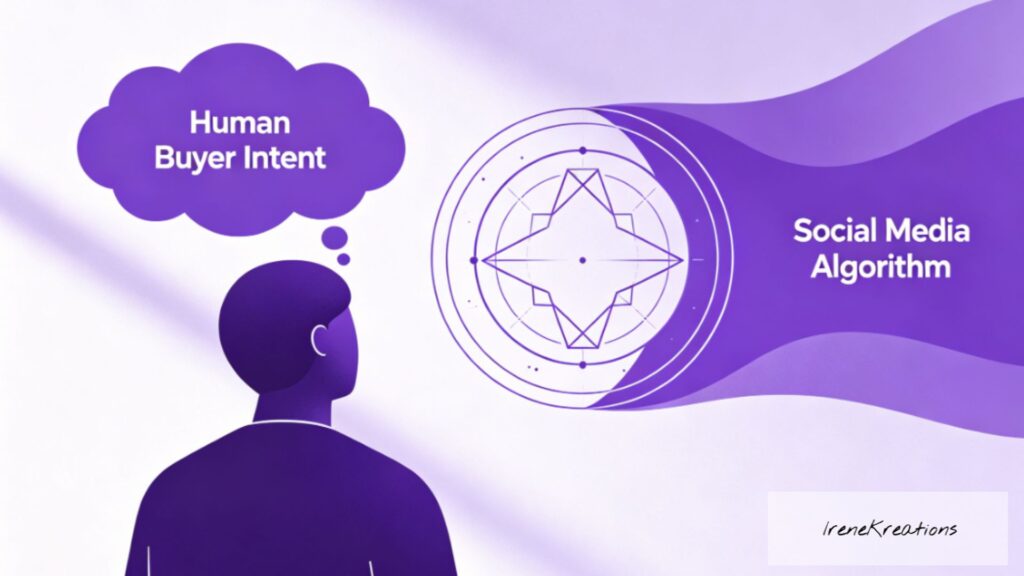
Objective Matters — Algorithm vs. Human Buyer Intent
Think of two separate but connected goals:
1-Audience Creation (Human-First)
This is content people voluntarily engage with because it speaks to curiosity, emotion, or aspiration.
Example:
⭐ “Your CNY Facial Starter Kit: Good Skin + Good Fortune”
Instead of “First-Time CNY Facial” you reframe the experience into something culturally curious, playful, and memorable.
This lets you hook:
✨ non-beauty-obsessed viewers
✨ people interested in Chinese New Year vibes
✨ users who don’t normally click skincare ads
👉 In other words, create entry points that start from their self-interest, not your service.
What Is an Entry Point?
An entry point is how someone unfamiliar with your brand finds relevance in what you’re talking about.
Instead of:
❌ “First-Time CNY Facial – Book Now!”
Try something like:
✅ “What a CNY Facial Starter Kit Includes (and Why It Feels Like Luck in a Bottle) 🍊🧧✨”
✅ “CNY Glow: 3 Surprises Inside Your Starter Kit (Qipao! Ang Bao! Skin Love!)”
Instead of:
❌ “New Orange flavoured Bakkwa just launch!”
Try something like:
✅ “What happens when CNY Bakkwa tries an ‘orange twist’ (we didn’t expect this flavour…) 🍊🧧😆”
✅ “CNY Bakkwa Gone Wild: 3 ‘New Flavours’ You Shouldn’t Take Seriously (Orange Included) 😂🔥”
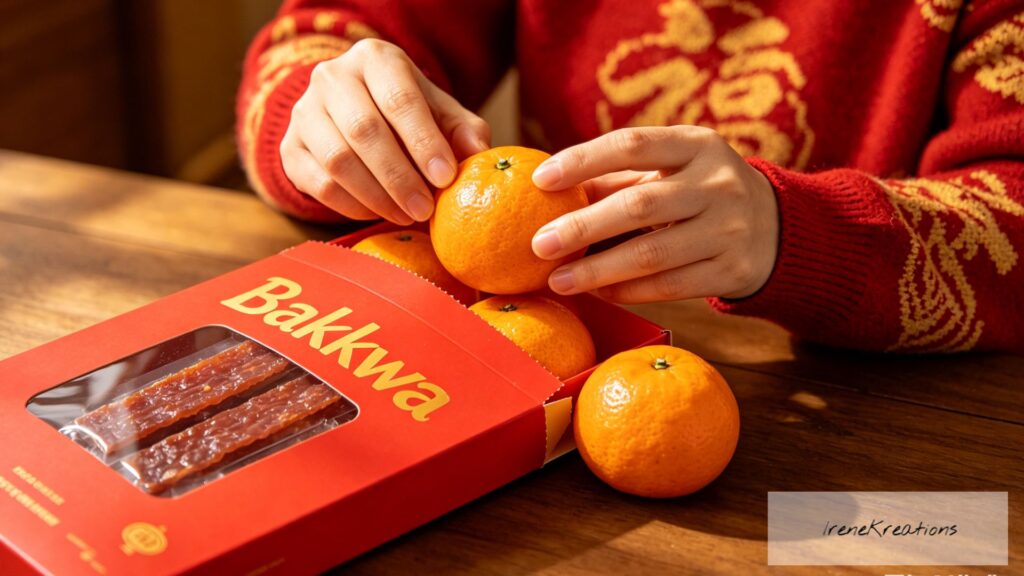
These cues make even non-beauty folks curious — and the algorithm notices that curiosity.
Because if someone pauses or taps on your content — even if they don’t book yet — that tells the algorithm this is relevant.
Why This Works Better in a Saturated Market
Beauty lines and wellness ads are everywhere.
If your entry point is the same as everyone else’s, humans and algorithms ignore it.
DON’T DO THIS: “Facial Treatment Promo”
DO THIS INSTEAD: “CNY Facial Starter Kit: Skin, Traditions & Tiny Luxuries”
One is functional.
The other is experience-driven, culturally resonant, emotionally engaging.
Some content doesn’t need to “go viral” to work — it just needs to connect deeply with the right person.
And that starts with a thoughtful hook.
“If marketing feels fake, you’re using someone else’s voice.”
Patterns to aim for:
“How to”, “Why”, “What…” + CNY + Facial/Skincare + Starter/Beginner”
These questions are search-ready and help speed up discovery in Google People Also Ask.
Insights: What People Actually Want to See
People don’t respond to:
❌ Generic before/after photos
❌ Static sales captions
❌ “Book Now” CTAs on first touch
They do respond to:
✨ Relatable scenarios (curiosity + context)
💬 Story-based entry points
🍊 Cultural tie-ins (CNY traditions + beauty)
🎁 Unexpected extras (Ang Bao, Qipao, tips, rituals)
📍 Practical info plus emotional framing
Summing Up: What Is an Entry Point in Content Strategy?
An entry point is the first emotional or logical reason someone stops scrolling.
It is NOT:
- A sale
- A promotion
- A price drop
It IS:
- A relatable situation
- A timely concern
- A strong observation
- A curiosity trigger
Why Hooks Matter More for CNY Services
CNY season is:
- High competition
- High noise
- High urgency
Everyone is shouting:
- “Book now”
- “Limited slots”
- “Best deal”
So attention is the real currency.
If your hook is weak:
👉 You disappear
Why Small Business Owners Struggle With Content Courses
Many courses teach tools, not thinking. They cover:
📌 “How to post on Instagram”
📌 “Which template to use”
📌 “How many reels per week”
But they rarely teach:
✔ How to craft an entry point
✔ How to choose an objective before execution
✔ How to match messaging with buyer intent
✔ How to think about emotion + search behaviour
This gap is real — and practical marketers in Singapore are talking about it. Many SMEs here struggle with digital skills gaps and marketing execution. A recent survey noted that 60 % of SMEs still can’t fully digitalise their marketing because of content creation challenges and a lack of in-house expertise — not lack of budget.
Local Insights From Singapore Business Landscape
📌 Singapore SMEs are in a red ocean — competition is fierce, and costs are high.
📌 Many small businesses aren’t ready for advanced digital marketing without strategic thinking, simply because they lack specialised knowledge and clarity.
📌 Consistent, purposeful content — not random posting — significantly improves discovery and trust.
The Strategy Most Business Owners Miss
They focus on:
❌ Offer clarity
❌ Price clarity
But ignore:
👉 Entry clarity
If people don’t enter your content, they never reach your offer.
Most People Don’t See this (But it Determines Conversion)
This is where most DIY marketing fails:
❗ “I don’t know how my audience thinks”
You assume urgency. They are still in hesitation.
❗ “My content is informative but not attention-grabbing”
Information is not the same as engagement.
❗ “I post offers too early”
You skip emotional entry points.
❗ “I treat all viewers like ready buyers”
But most are still observers.

The knowledge gaps business owners are facing today
Q: How do I create hooks for Festive services?
For seasonal campaigns like Festives, hooks work best when they reflect real emotional pressure points and timing behaviour, not just festive messaging.
Effective hook directions:
-Urgency-based triggers: “Still haven’t booked your CNY prep yet?”
-Mistake awareness: “Most people only realise this after CNY bookings are full…”
-Relatable situations: “When your relatives show up and everything suddenly feels unprepared…”
-Curiosity gaps: “The CNY mistake that quietly affects how your space is perceived…”
The key is not to “sell the Festive / CNY services,” but to anchor attention in a familiar emotional moment, then guide it toward your solution.
Q: What makes content trustworthy in the Singapore market?
A: Trust here is not built through hype or personality alone—it’s built through consistency signals.
Key drivers:
-Consistency: same tone, message, and visual direction over time
-Clarity: no overcomplication, no vague messaging
-Emotional tone awareness: calm, grounded communication tends to outperform overly loud persuasion
Q: Do I need to be entertaining to grow on social media?
No. Entertainment is one format, not a requirement. What actually drives sustainable growth is:
-Clear thinking
-Relatable context
-Intentional messaging
People follow clarity, not just personality.
Q: Why do my competitors get more views?
A: In most cases, it’s not that their content is “better”—it’s that it’s easier to classify and distribute. Typical advantages they have:
-Stronger hooks that immediately define relevance
-Clear niche positioning (the algorithm knows exactly who to show it to)
-Repetitive content themes that train audience recognition
-More consistent engagement history (which builds distribution confidence)
Q: How do I know if my content is aligned with my brand?
A: Check for repeatability and recognition.
Ask:
-Does it sound like me without forcing it?
-Would the same audience consistently recognise this style?
-Does it feel natural to repeat weekly without exhaustion?
-Does it attract the right people, not just more people?
If your content only works when you “try hard,” it’s not aligned yet. If it feels natural but still intentional, you’re close to alignment.
How IreneKreations Approaches Entry Point Strategy Differently
Most marketers teach:
- “Write better captions”
- “Use trending hooks”
IreneKreations teaches:
👉 How people think before they buy
1. Starts with brand identity and positioning, not trends
We define:
- What your audience actually feels
- What they hesitate about
- What triggers trust
2. Builds credibility-first content
Not:
- Viral reach
But:
- First-time customer trust
3. Focuses on emotional alignment
Hooks are not tricks — they are:
👉 Emotional entry doors
4. Builds realistic systems
So you don’t need to guess every post.
5. Pre-trend insight (Marketing agency practice)
We observe:
- What actually gets saved
- What gets ignored
- What drives conversion behavior
Summing Up: How IreneKreations Helps
IreneKreations exists to guide business owners back to clarity and foundation.
We help you:
✔ Define what you want people to know first (not what you want them to buy)
✔ Craft entry points and emotional hooks that actually attract attention
✔ Align your brand messaging with search behaviour and buyer intent
✔ Build thoughtful content systems that honour your values and your audience’s perspective
Because:
“Inconsistency is often an identity problem, not a skill problem.”
We don’t just train you to post — we make sure every piece of content reflects who you are, and how you want to be remembered.
Brand Philosophy That Sets Us Apart
✔ We start with brand essence, not trends.
✔ We clarify who you are, what you stand for, and how you want to feel.
✔ We focus on credibility and trust, not just visibility.
✔ We design systems that fit energy and capacity — not burnout.
✔ We lead with pre-trend insight, not outdated playbooks.
Final Thought
In a world where “just post more” is the default advice, the thoughtful brand wins.
✨ Your content isn’t just visual quality —
it’s about what people actually want or don’t want to see.
And great marketing isn’t about being seen by everyone —
it’s about being understood by the right ones.
✧⭒✦✧⭒✦◇ Get Social Media | Branding | Marketing | Content Strategy Support in Singapore ✦⭒✧✦⭒✧
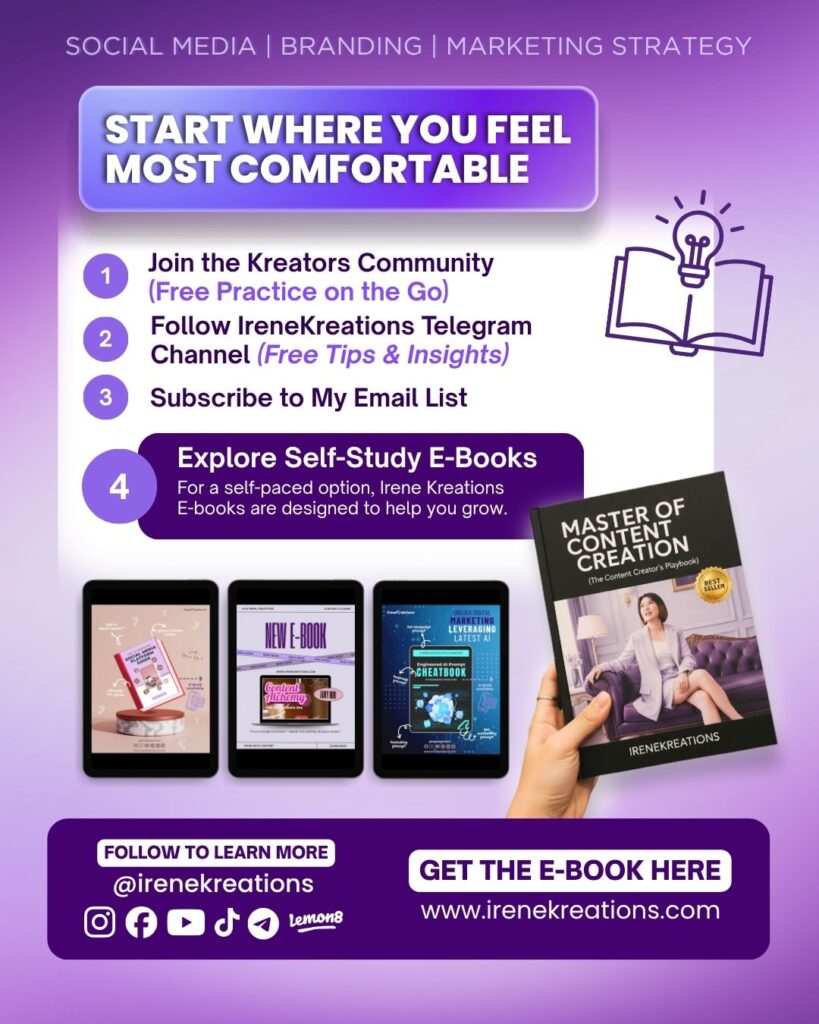
You can start in a way that feels more comfortable:
1. Join the Kreators Community (Free)
A supportive, non-transactional space where creators and business owners come together to learn, share, and grow.
It’s not about hard selling or competition — it’s more like a kampung-style environment where people:
-Exchange ideas and experiences
-Learn from Irene on the ground in a practical content creation session
-Build genuine connections with other creators & business owners
The focus is on growing together, not performing alone.
👉 [Join Kreators Community]
2. Explore Self-Study E-Books
If you prefer to process things at your own pace, IreneKreations E-books are designed to help you:
-Think clearer about your content and positioning (for a specific niche)
-Understand why you’re stuck (not just what to do)
-Build your own structure without overwhelm
👉 [Browse Growth Hacks E-Books Library]
3. Follow My Telegram Channel (Free Tips & Insights)
If you’re still observing and learning, this is a good place to start.
I regularly share:
-Practical content and branding insights
-Realtime Tips or Customer’s Proven Case Study
-Real thoughts behind strategy (not just surface tips)
-Observations from real business and creator experiences
-At times, leveraging AI for content marketing tips
👉 [Join IreneKreations Telegram Channel]
4. Subscribe to My Email List (Free Insights)
If you prefer something simple, you can join my mailing list.
This is where I share:
-Deeper breakdowns of Marketing knowledge and experience sharing
-Insights I don’t always post on social media
-Practical reflections to help you think more clearly about your direction
It’s designed for people who want steady clarity over time, not just quick tips.
👉 [Subscribe to Email List]
You don’t have to figure everything out alone.
But you also don’t have to rush your process.
Whether you prefer:
-Talking things through
-Learning at your own pace
-Getting small consistent insights
-Or simply observing for now
There’s a space for you here, built and supported by IreneKreations.