
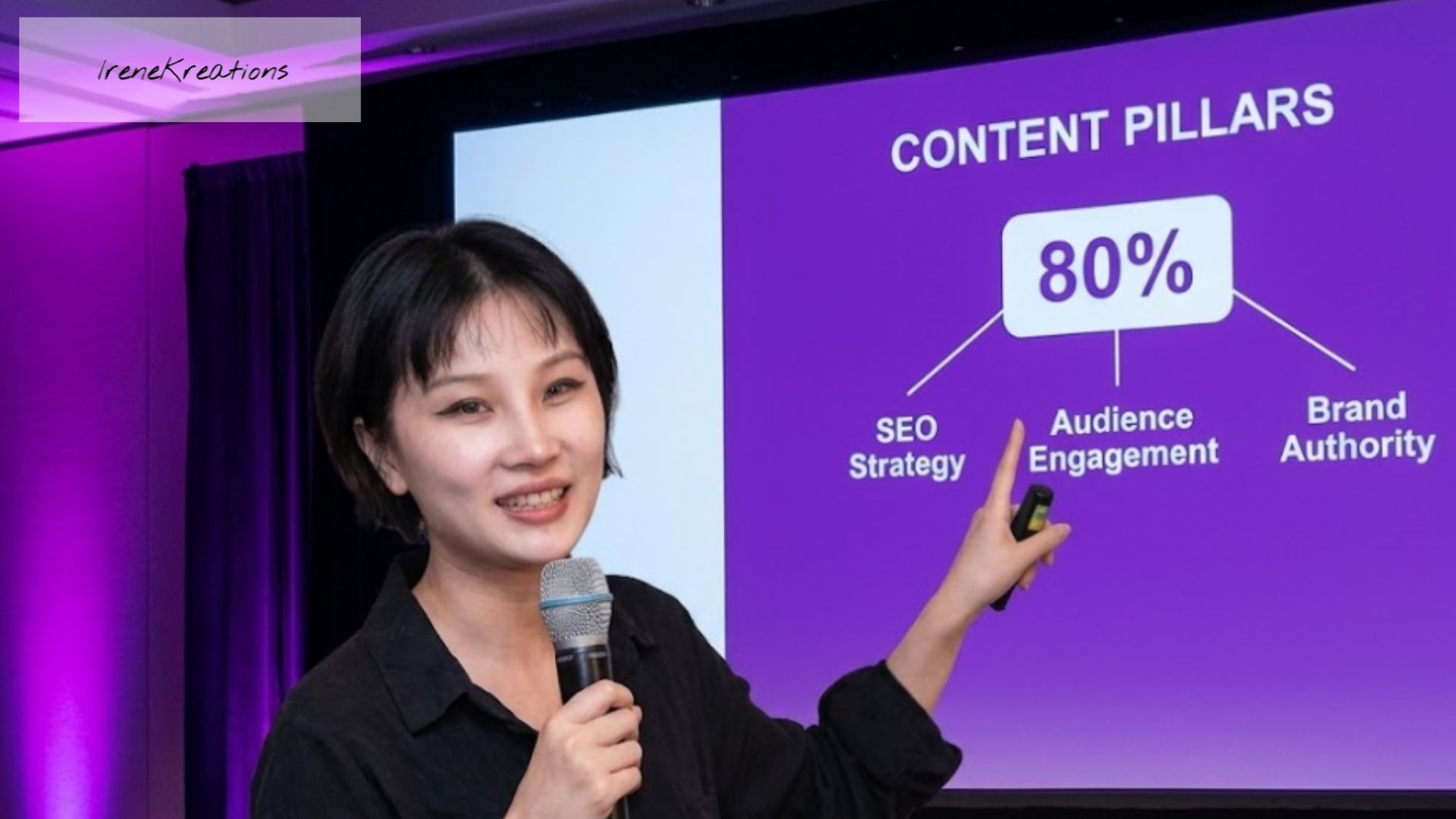
If you’ve ever Googled “how to be consistent on Instagram in Singapore” or “what should I post for my business?” — you’ve likely been told to “create content pillars.”
But here’s the disconnect:
Most advice stops at what content pillars are… not how to find yours in a way that actually works for your business.
Let’s fix that.
First, what content pillars are NOT
Before we define them, let’s clear common confusion:
- They are not broad topics (e.g. “marketing” or “lifestyle”)
- They are not formats (Reels, carousels, TikTok)
- They are not your posting schedule
- They are not your content goals
👉 If your pillars feel vague or forced, that’s why consistency feels exhausting.
What content pillars actually are
Content pillars are your core, repeatable themes — the topics your audience can recognise, trust, and return to you for.
They sit at the intersection of:
✨ What you know deeply (skills, lived experience, perspective)
✨ What your audience needs right now (search intent, pain points)
✨ What your business offers (your services, outcomes, transformations)
Think of them as your content identity system.
Why most business owners struggle with content pillars
If you’re a small business owner, freelancer, or coach in Singapore, your reality likely looks like:
- You’re short on time ⏳
- You’re juggling multiple roles
- You feel pressure to “keep posting”
- You overthink every piece of content
So instead of clarity, you get:
👉 Random posts
👉 Inconsistent messaging
👉 Low engagement despite effort
The issue isn’t discipline.
It’s lack of aligned structure.

How to actually find your content pillars (step-by-step)
1. Audit what already exists
You don’t need to invent pillars — you need to identify patterns.
Ask yourself:
- What do people already ask me about repeatedly?
- What topics do I naturally talk about without effort?
- Which past posts performed well — and why?
💡 Micro-intent insight: Search your DMs, comments, and even Google queries like
“how to create content pillars for small business Singapore”
2. Map your audience’s real questions
Your audience is already telling you what they need.
Look for:
- “How do I stay consistent on social media?”
- “What should I post for my business niche?”
- “Why is my content not converting?”
These are long-tail questions — and they should shape your pillars.
3. Connect to your business outcomes
Every pillar must link back to what you offer.
For example:
- If you’re a social media coach → pillars might include content clarity, strategy, mindset
- If you run a café → pillars might include menu highlights, behind-the-scenes, customer experience
👉 If it doesn’t support your business, it shouldn’t be a pillar.
4. Refine into 3–5 clear pillars
Keep it simple.
Example (for a content coach in Singapore):
- Content Clarity & Strategy
- Social Media Consistency Systems
- Mindset & Confidence in Showing Up
- Real Client Case Studies
✔ Clear
✔ Repeatable
✔ Relevant
What happens when your pillars are aligned?
Everything changes:
✔ You stop second-guessing what to post
✔ You create faster (less decision fatigue)
✔ Your audience understands you instantly
✔ Your content starts building trust, not just visibility
Consistency becomes a byproduct — not a struggle.

The information people are actively seeking clarity on:
Q: How can I DIY my social media content in Singapore without hiring an agency?
A: DIY content only works well when it becomes a system, not daily improvisation.
A practical approach:
-Learn your core content types
-Define brand pillars so you are not guessing topics every day
-Use AI with structured prompts, not random ideas or trend copying
-Build repeatable formats (hooks, breakdowns, CTA styles)
-Focus on consistency, not perfection
Q: How many Reels should I post to grow?
Posting frequency alone does not create growth. What matters more:
-Clear positioning (what your account is known for)
-Strong hooks (why someone should stop scrolling)
-Repeatable content structure (so the system learns your niche)
You can post 1 strong, clear Reel and outperform 10 inconsistent ones. Growth comes from pattern clarity, not volume.
Q: How do I make educational videos less boring?
A: Focus on structure, not performance. Most “boring” educational content fails because it starts with explanation instead of attention.
Try using this flow instead:
-Tension hook (a problem they already feel)
-Simple breakdown (1 idea at a time, not everything at once)
-Relatable situation (show where this shows up in real life)
-Clear takeaway (what they should do or think differently)
Make it feel like you’re solving confusion, not delivering a lecture.
Q: How do I understand my audience on a psychological level?
A: Understanding your audience goes beyond demographics—it is about decision psychology.
Focus on:
-Needs: What they are actively trying to solve or improve
-Fears: What they want to avoid (loss, regret, waste, embarrassment, etc.)
-Motivations: What outcome they are really chasing emotionally
-Decision patterns: How they evaluate trust before buying
Most buying decisions are not logical first—they are emotional first, then justified logically after.
Final Thought
At IreneKreations, the goal isn’t just “more content.”
It’s helping you return to clarity, calm confidence, and purposeful communication.
Because when your foundation is clear,
you don’t chase content ideas —
you build a brand people remember.