
The agents winning today are not always the ones with the biggest listings — they are the ones who can make people feel a property in under 30 seconds.
As one marketing principle often repeated by content strategists puts it:
“People don’t buy properties. They buy futures they can picture themselves in.”
And short-form video is now the fastest way to build that picture.
In an attention economy where average users scroll within 1.7–2.5 seconds before deciding to stay or leave, platforms like Instagram Reels, TikTok, and YouTube Shorts are no longer optional for property agents — they are essential distribution engines.
Reports from industry studies (including HubSpot’s State of Marketing and TikTok business insights) consistently show:
- Short-form video has the highest ROI among social media content formats
- Video posts generate significantly higher engagement than static listings
- Real estate listings with video receive substantially more inquiries than those without
In simple terms:
If your property isn’t being felt in video, it is being skipped in silence.
Short-form videos are one of the fastest ways for real estate agents to connect with potential buyers and sellers online. Platforms like Instagram Reels, TikTok, and YouTube Shorts thrive on quick, engaging, and informative content.If you’re new to video marketing, this guide will help you plan, structure, and create videos that get attention and generate leads.
1. Types of Short-Form Videos
Understanding the types of videos you can create helps you stay consistent and diversify your content. Here are 8 popular kinds for real estate professionals:
- Educational / Value – Teach something quickly.
Example: “3 tips to get your home ready for sale.” - Demonstration / Tutorial – Show a process or step-by-step guide.
Example: “How to evaluate if a property is priced right.” - Problem–Solution – Highlight a common problem and provide a solution.
Example: “Struggling to sell your house fast? Here’s how I help homeowners attract buyers quickly.” - Before–After Transformation – Show changes or improvements.
Example: “From empty apartment to staged dream home – see the difference!” - Testimonial / Social Proof – Share client success stories.
Example: “We helped this family find their dream home in just 2 weeks!” - Emotional / Relatable – Capture everyday frustrations or joys.
Example: “That feeling when you finally get the keys to your first home.” - Behind the Scenes (BTS) – Show what happens behind the scenes in your work.
Example: “A day in the life of a property agent: property tours, paperwork, and client calls.” - Promotional / Offer Highlight – Highlight services or special deals.
Example: “Free home valuation for the first 10 clients this month – DM me now!”

2. Structuring Your Videos
A good video keeps viewers hooked from start to finish. Here are two proven structures:
A) Hook → Problem → Solution → CTA
This works best for educational or problem-solving videos.
- Hook: Grab attention in the first 1–2 seconds.
Example: “Thinking of selling your home but don’t know where to start?” - Problem: Explain the pain point your audience faces.
Example: “Most homes sit on the market for months because they aren’t priced or staged correctly.” - Solution: Show how your expertise can help.
Example: “I help homeowners attract buyers fast by pricing strategically and staging effectively.” - CTA (Call to Action): Guide viewers to take action.
Example: “Message me today for a free property consultation!”
B) Hook → Opening → Peak → Ending
This storytelling format works well for emotional or transformation-driven content.
- Hook: Intrigue your audience.
Example: “Here’s how we helped a family sell their house in under a week.” - Opening: Set the scene.
Example: “They had tried multiple agents with no success and were getting frustrated.” - Peak: Show the main action or result.
Example: “We staged their home, marketed it online, and hosted an open house – the offers came flooding in.” - Ending: Close with a satisfying or emotional payoff.
Example: “They sold above asking price and are now moving into their dream home.”
(C) Problem → Empathy → Solution → CTA
Scenario: Homeowners struggling to sell in a slow market.
- Hook: “Your house has been on the market for months with no offers?”
- Empathy: “We know how frustrating it is to invest time and money and still see no results.”
- Solution: “Our strategic pricing and professional staging help homes attract buyers faster.”
- CTA: “DM me today for a free property assessment!”
(D) Teaser → Reveal
Scenario: Staged property transformation.
- Hook: “This empty condo looks ordinary… wait till you see the final look!”
- Content Flow: Show short clips of the empty space, hints of furniture being added, a fast-motion setup.
- Reveal: Show the beautifully staged apartment with wide-angle shots.
- CTA: “Ready to sell your home faster? Contact us to transform your space!”
(E) Step-by-Step / How-To
Scenario: Preparing a home for sale.
- Hook: “Want to sell your house quickly and at the best price?”
- Step 1: Declutter and clean every corner. Show before/after clips.
- Step 2: Stage key rooms like the living room and master bedroom.
- Step 3: Professional photos and listing online.
- CTA: “Follow these 3 steps and message me if you want a personalized plan!”
(F) Challenge / POV
Scenario: A busy agent managing multiple properties.
- Hook: “POV: You have 3 client showings in one afternoon.”
- Content Flow: Quick clips showing prep, keys in hand, client tours, paperwork.
- Ending: “Managing it all is tough, but the results are worth it!”
- CTA: “If you want to simplify your selling journey, let me help.”
(G) Top Tips / Listicles
Scenario: Pricing a property correctly.
- Hook: “5 pricing mistakes that could cost you thousands!”
- Tip 1: Setting the price too high.
- Tip 2: Ignoring local market trends.
- Tip 3: Forgetting seasonal timing.
- Tip 4: Not considering online exposure.
- Tip 5: Comparing only with neighbor homes.
- CTA: “Avoid these mistakes—message me for a free home valuation.”
(H) Before → During → After
Scenario: Home staging and quick sale.
- Hook: “Watch this property sell in just 7 days!”
- Before: Show cluttered rooms and empty spaces.
- During: Clips of staging process, furniture placement, decor added.
- After: Beautifully staged home, “Sold” sign outside.
- CTA: “Want your home sold fast? Let’s chat!”
(I) Reaction / Response
Scenario: Debunking a selling myth.
- Hook: “Everyone says selling in December is impossible… but that’s false.”
- Content Flow: Show stats, quick visuals of recent December sales, and personal experience.
- Ending/CTA: “The right strategy works year-round—message me to find out how.”
(J) Comparison / vs
Scenario: Selling with staging vs. without staging.
- Hook: “Staged home vs. unstaged home – which sells faster?”
- Visuals: Side-by-side clips of same rooms, one empty, one staged.
- Content Flow: Highlight buyer reaction, offers received, faster sale timeline.
- CTA: “Want to sell your home faster? Let’s stage it together!”
(K) Storytelling / Case Study
Scenario: Family struggling to sell, then successfully sold with your help.
- Hook: “Meet the Smiths—they couldn’t sell their house for months.”
- Opening: “They tried several agents, but no buyers were interested.”
- Peak: “We staged their home, optimized the listing, and held targeted open houses.”
- Ending: “Their house sold above asking price in just 10 days!”
- CTA: “Want a success story like this? Contact me today!”
(L) Behind the Numbers / Insights
Scenario: Explaining a local property trend.
–CTA: “Message me to find out how your home fits into today’s market trends!”
–Hook: “Did you know homes in District 5 sold 25% faster this year?”
–Content Flow: Show simple charts, property clips, and explain what this means for sellers/buyers.
–Ending: “The market is moving fast, and timing is key.”
3. Other Short Video Structures to Try
To keep your content fresh, experiment with these formats:
- Question → Answer – “What’s the best time to sell your property? Here’s what you need to know.”
- Myth → Reality – “Myth: You can’t sell a property in a buyer’s market. Reality: Strategic pricing works.”
- POV Style – “POV: You walk into your first open house and instantly fall in love.”
- List Format – “3 mistakes homeowners make when selling their house.”
- ASMR / Satisfying Clips – Visuals of property walkthroughs, clean spaces, or home transformations.
4. Tips for Beginners
- Keep videos short and focused – 15–60 seconds works best.
- Include a hook in the first 1–2 seconds to grab attention.
- Focus on one idea per video – don’t overwhelm viewers.
- Use captions or text overlays – many watch without sound.
- End with a CTA or emotional payoff – guide your audience to take the next step.
Short-form video can feel intimidating, but with these structures and ideas, real estate agents can create content that educates, engages, and converts. Start simple, stay consistent, and watch your audience grow!
Why Social Media Is Essential for Property Agents in 2026
Real estate used to run on location, flyers, and referrals.
Now it runs on:
- Algorithm visibility
- Personal branding
- Trust built at scale
Social media is no longer just “marketing.” It is:
- Your digital showroom
- Your credibility portfolio
- Your 24/7 lead generator
Key reality shift:
Most buyers and renters now begin their property journey online before contacting an agent.
This means your job is no longer just to sell property.
It is to:
- Capture attention
- Build trust fast
- Translate space into emotion
Short-form video does exactly that.
What Is Short-Form Video Storytelling in Real Estate?
It is not just property walkthroughs.
It is emotional micro-narratives about space.
Instead of:
- “3-bedroom condo in District 15”
You create:
- “What your morning feels like waking up here”
Instead of:
- “New listing with sea view”
You show:
- “How your evenings slow down when the sun hits this balcony”
The structure is simple:
- Hook (0–3 seconds)
- Emotional framing (what this space feels like)
- Visual storytelling (key features as scenes, not specs)
- Micro-call to action (DM, enquiry, viewing)
Positivity & Investment Tips as a Strategic Content Pillar
For example, for property agents and real estate investment advisors, Positivity & Investment Tips provide the perfect balance between relatability and authority. By addressing specific, high-intent questions, your brand positions itself as a trusted guide, showing expertise at the exact moment prospects are evaluating property investment options.
Examples of strategic search questions include:
- “Is now a good time to invest in Singapore property?”
- “How can I start property investment with a small budget?”
- “What are the common mistakes new investors make?”
- “Which neighborhoods in Singapore have the best long-term growth potential?”
- “How do I stay confident during property market fluctuations?”
By answering these questions first, agents capture attention before competitors, build credibility, and create a pathway for higher investment confidence.
High-performing hook styles:
- “Most people miss this part of this home…”
- “If I was buying my first home, I would look at THIS…”
- “This is what $X,000/month actually feels like…”
- “Not many agents will show you this angle…”
This is where attention is won or lost.
Topics Derived from FAQ SEO (AEO)
Using a question-led, AEO-focused approach, blog topics for property investment can be strategically created:
- “5 Rookie Mistakes New Property Investors Make—and How to Avoid Them”
- “Why Patience and Positivity Can Boost Your Investment Returns”
- “Top 7 Singapore Neighborhoods With High Property Growth Potential in 2026”
- “The Hidden Costs of Buying Property Without a Strategy—and What Works Instead”
- “How a Positive Mindset Helps You Navigate Market Fluctuations”
- “Starting Property Investment With a Small Budget: A Practical Guide for Beginners”
These topics not only attract readers but are structured for search engines, helping your brand appear in “People Also Ask” and other high-value search features.
Social Media Content Ideas
These Social Media Content Ideas are designed to answer questions in bite-sized formats:
Carousel 1:
- Title: “3 Mindset Shifts Every Property Investor Needs”
Slides: Common worry → Insight from market trends → Practical tip → CTA
Carousel 2:
- Title: “Why Many New Investors Fail—and How to Avoid It”
Slides: Typical mistake → Strategic insight → Step-by-step action → CTA
Carousel 3:
- Title: “How to Identify High-Growth Properties in Singapore”
Slides: Problem → Market analysis → Practical checklist → CTA
Carousel 4:
- Title: “Shorten Your Investment Learning Curve With Smart Tips”
Slides: Step-by-step guide using FAQs, actionable advice, and success examples
Storytelling Angles That Work for Property Agents
Instead of listing features, shift into narrative frames:
1. Lifestyle Lens
- “A morning routine in this space”
- “After-work life here feels like…”
2. Problem-Solution Lens
- “Tired of cramped layouts? This solves it.”
- “If storage is your biggest issue, watch this…”
3. Emotional Identity Lens
- “For young couples building their first home”
- “For professionals who want calm after work”
4. Curiosity Gap Lens
- “There is one feature in this unit most people overlook…”
Common Mistakes Property Agents Make on Social Media
1. Over-focusing on specs instead of emotion
People don’t remember square footage. They remember how it felt.
2. Treating every video like a listing sheet
Short-form content is not a brochure. It is a story.
3. Inconsistent posting
Algorithms reward consistency more than perfection.
4. Lack of brand identity
Without visual consistency, agents become interchangeable.
People are searching online: Real Estate Short-Form Video Strategy FAQ
Q1: Why is short-form video important for real estate agents?
Short-form video increases visibility, builds trust faster, and helps agents emotionally showcase properties, which significantly improves inquiry rates.
Q2: How long should real estate videos be on Instagram Reels or TikTok?
Most high-performing real estate videos are between 7–30 seconds, focusing on one emotional theme per video.
Q3: Do property walkthrough videos really increase sales?
Yes. Industry marketing reports consistently show that listings with video attract higher engagement and more qualified leads than photo-only listings.
Q4: What should a beginner property agent post on social media?
Start with:
- Simple walkthroughs
- “Day in the life of a property agent”
- Neighborhood highlights
- Client lifestyle storytelling
Q5: How often should real estate agents post videos?
Consistency matters more than frequency. A sustainable baseline is 3–5 short videos per week.
Q6: What makes a real estate video go viral?
Strong hooks, emotional storytelling, relatable lifestyle framing, and fast pacing aligned with platform algorithms.
Conclusion
Short-form video is no longer just a marketing tool for property agents — it is the new language of trust, attention, and emotional decision-making.
The agents who learn to tell better stories will not just sell more properties — they will build stronger personal brands that outlast market cycles.
And as social media continues to evolve, the real question is no longer whether you should show up online…
It is whether your audience can feel your story clearly enough to choose you when it matters most — are you ready to start telling it?
✧⭒✦✧⭒✦◇ Ready to Level Up Your Socials? ✦⭒✧✦⭒✧
Still struggling with messy marketing or feel lost on social media? It’s time to change that. Dive into IreneKreations’ Recommended Social Marketing E-Books — a curated library filled with FREE and premium guides crafted for business owners who want real, lasting results.
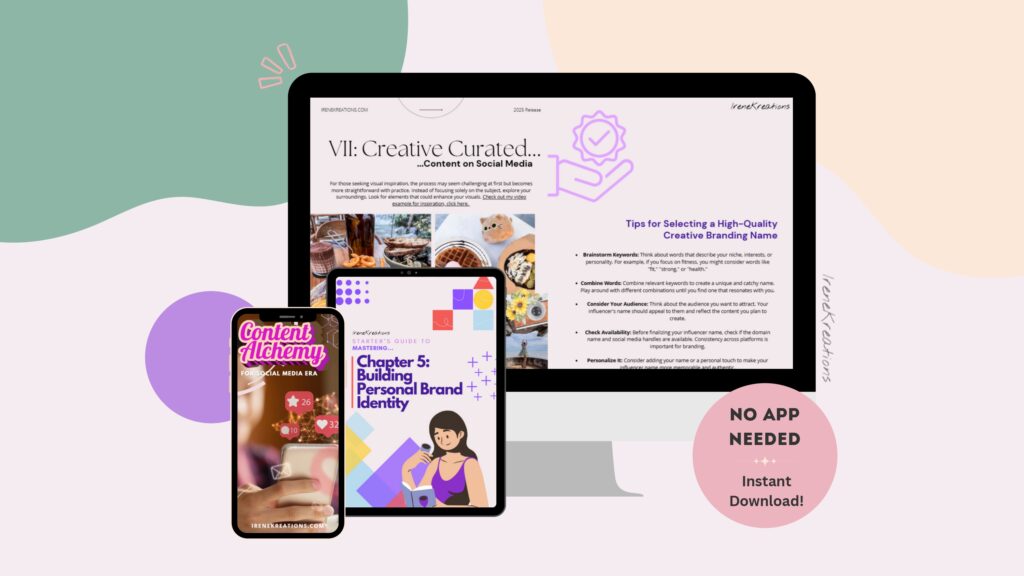
From social media to content strategy and branding, these resources are your shortcut to making marketing finally make sense (and work).
Instant access. Powerful strategies. Business-ready results.