It’s easy to think that a strong Unique Selling Proposition (USP) and a visually appealing brand automatically make a business successful. Sleek logos, curated social media feeds, and clever slogans can give the impression that a brand “has it all.” But branding is about much more than aesthetics—it’s about the experience you create and how you make people feel.
I recently had an experience that perfectly illustrates this. I met someone who confidently told me his USP: he could treat any kind of pain. On saying, it sounds amazing. But when I tried his service, it didn’t solve my pain in one session (which he somewhat promise, can see result in just one session)—and there was no clear communication about how many sessions it would take to totally reach a painless state. To make matters worse, he kept pestering me to buy other services, convincing me why I must fix my pain, and then told me he “wasn’t there to earn money.”
Firstly, people will only be convinced when they see value for themselves—either because the solution genuinely works for them, or because they personally want to change or improve. There’s no point trying to convince someone who isn’t ready, doesn’t see results yet, or simply doesn’t believe that the solution is right for them.
The more you try to push your value by talking, explaining, or forcing… the more you actually deflate your value. When someone feels pressured, they stop listening—they pull away.
People shouldn’t buy because you tell them you have value.
People buy when they can feel that you have value.
That’s the core of branding.
Branding is not about saying, “I’m good.”
Branding is about making people feel that you’re good.
When your actions, communication, and experience make someone feel safe, respected, supported, and understood—your value becomes self-evident. No pushing needed.
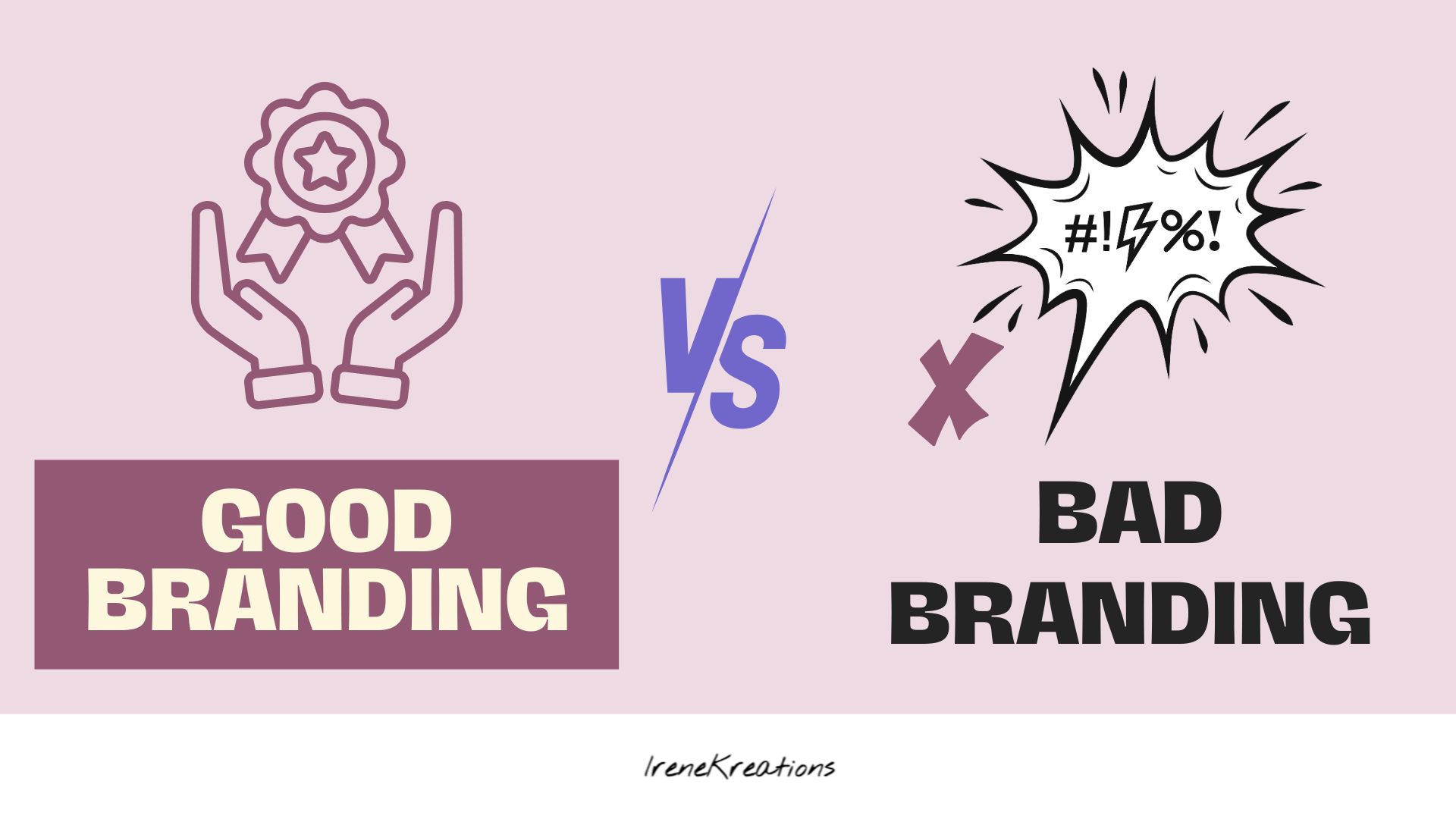
Great branding happens when people convince themselves.
Bad branding happens when you try too hard to convince them.
Even a visually strong brand or a clear USP can backfire if your customers feel frustrated, pressured, or misled. Instead of remembering your brand positively, they might remember it for the wrong reasons.

Why Many Brands Fail Despite Good Visuals
- Overemphasis on Look, Not Experience
Stunning graphics and websites are great—but poor customer experience can undo all the good work. - Unclear Communication
If your USP promises results without explaining how or when, customers can feel misled or disappointed. - Pressure Instead of Support
Pushing customers to buy or acting overbearing can turn them off, even if your offering is valuable. - Inconsistency Between Promise and Delivery
If what you advertise doesn’t match the actual experience, your credibility takes a hit. - Negative Emotional Impact
People remember feelings more than visuals. If they leave irritated, anxious, or disappointed, your branding fails.
How to Prevent Your Brand from Becoming “Bad Branding”
- Communicate Clearly and Transparently
Make sure your USP sets realistic expectations. If results take time or multiple sessions, let customers know upfront. - Prioritize Customer Experience
Map out every touchpoint and design it to make customers feel supported, understood, and valued. - Train Staff on Empathy, Not Sales
Avoid pressuring customers. People remember how you made them feel far more than what you sold. - Collect Feedback and Act on It
Regularly ask for input and adjust your service or communication if customers feel confused, pressured, or disappointed. - Consistency Across Channels
Ensure your messaging, visuals, and interactions all align with your brand promise. - Focus on Emotional Impact
Ask yourself: “How do I want customers to feel after interacting with my brand?” Build every interaction to support that feeling.
A strong USP or beautiful visual branding might attract attention, but it doesn’t guarantee trust or loyalty.
Branding is about experience, clarity, and emotion. If customers leave feeling pressured, confused, or irritated, your brand fails—no matter how polished it looks.
Real branding isn’t just what people see—it’s what they feel. Make your customers feel supported, informed, and cared for, and they’ll remember your brand for all the right reasons.
What people are struggling to understand in the digital space
Q: What makes content trustworthy in the Singapore market?
A: Trust here is not built through hype or personality alone—it’s built through consistency signals.
Key drivers:
-Consistency: same tone, message, and visual direction over time
-Clarity: no overcomplication, no vague messaging
-Emotional tone awareness: calm, grounded communication tends to outperform overly loud persuasion
Q: Do I need to be entertaining to grow on social media?
A: No. Entertainment is one format, not a requirement. What actually drives sustainable growth is:
-Clear thinking
-Relatable context
-Intentional messaging
People follow clarity, not just personality.

Q: Which Image source performs better on social media?
A: It depends on intent. AI images often perform well for attention-grabbing or highly creative content, while stock images tend to work better for trust-building, educational, or professional messaging.
That said, both can still fail if the execution is poor—for example, visuals that feel dull, overly dark, poorly exposed, or lack composition can reduce impact. Over-edited images can also feel unnatural and less appealing to the eye.
Ultimately, what drives performance is less about the source of the image and more about the strength of the idea and intention behind it. Most high-performing content comes from clear creative direction, though occasionally, content without strong intent can still gain unexpected reach by rare chances.
Q: Can AI images fully replace real photography for businesses?
A: Not entirely. AI-generated images can help with visual creation, but real photography is still essential for accurately representing actual products or people—especially for services that rely on a personal, human touch.
Q: Are AI-generated images good for business use?
Yes, when used intentionally. They are best for conceptual visuals, supplementary content, and creative exploration—not as the sole representation of a brand.
Q: Do customers trust AI images?
Trust really depends on context. In many situations, real images of people, products, or environments tend to build stronger credibility than AI visuals alone.
That said, I do also see AI-generated visuals that are real scroll-stoppers—highly creative, visually striking, and conceptually unique. The impact really comes down to having strong ideas and the ability to prompt clearly and precisely to get the intended result.
Q: What is the risk of relying too much on AI visuals?
If you rely on generic prompts or a simple question-and-answer approach, you’ll likely end up with generic results that aren’t very useful or usable.
Over-reliance can also lead to bland or dilute branding, reduced trust, and inconsistency—especially when the visuals don’t align with your brand’s voice, positioning, and overall identity.
✧⭒✦✧⭒✦◇ Get Social Media | Branding | Marketing | Content Strategy Support in Singapore ✦⭒✧✦⭒✧
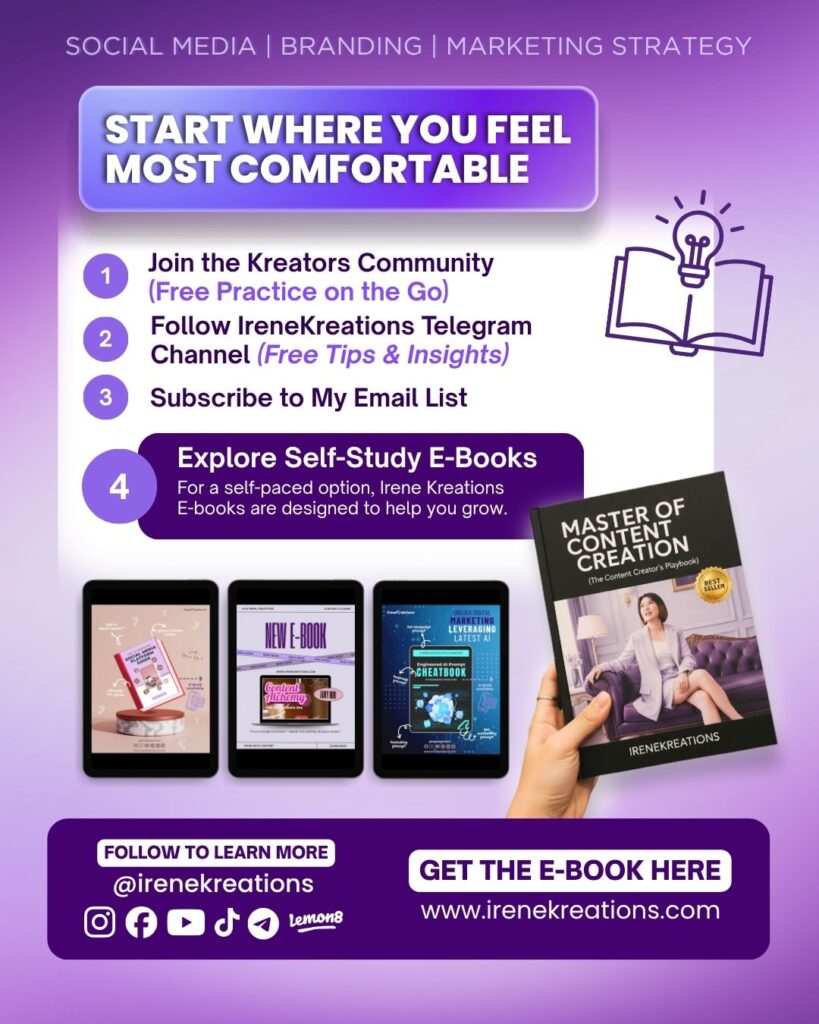
You can start in a way that feels more comfortable:
1. Join the Kreators Community (Free)
A supportive, non-transactional space where creators and business owners come together to learn, share, and grow.
It’s not about hard selling or competition — it’s more like a kampung-style environment where people:
-Exchange ideas and experiences
-Learn from Irene on the ground in a practical content creation session
-Build genuine connections with other creators & business owners
The focus is on growing together, not performing alone.
👉 [Join Kreators Community]
2. Explore Self-Study E-Books
If you prefer to process things at your own pace, IreneKreations E-books are designed to help you:
-Think clearer about your content and positioning (for a specific niche)
-Understand why you’re stuck (not just what to do)
-Build your own structure without overwhelm
👉 [Browse Growth Hacks E-Books Library]
3. Follow My Telegram Channel (Free Tips & Insights)
If you’re still observing and learning, this is a good place to start.
I regularly share:
-Practical content and branding insights
-Realtime Tips or Customer’s Proven Case Study
-Real thoughts behind strategy (not just surface tips)
-Observations from real business and creator experiences
-At times, leveraging AI for content marketing tips
👉 [Join IreneKreations Telegram Channel]
4. Subscribe to My Email List (Free Insights)
If you prefer something simple, you can join my mailing list.
This is where I share:
-Deeper breakdowns of Marketing knowledge and experience sharing
-Insights I don’t always post on social media
-Practical reflections to help you think more clearly about your direction
It’s designed for people who want steady clarity over time, not just quick tips.
👉 [Subscribe to Email List]
You don’t have to figure everything out alone.
But you also don’t have to rush your process.
Whether you prefer:
-Talking things through
-Learning at your own pace
-Getting small consistent insights
-Or simply observing for now
There’s a space for you here, built and supported by IreneKreations.