A growing number of creators and business accounts are reporting a similar pattern: sudden waves of comments, followers, or engagement coming from a specific foreign region—often low-relevance accounts, repeated phrasing, or activity that appears overnight across multiple platforms.
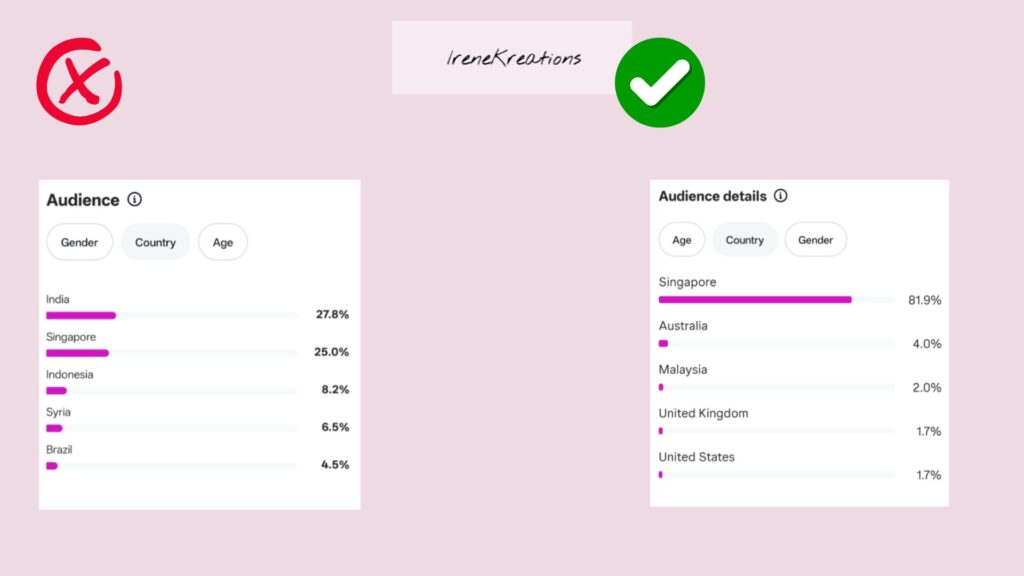
One recurring case involves sudden spikes of India-based accounts engaging with content that previously had stable, local audience patterns. While this can look confusing or even suspicious, it’s important to understand what is actually happening before reacting emotionally or making assumptions.
For most people scrolling through social media, engagement numbers are often taken at face value. More comments? More likes? People assume the content must be performing well organically.
But marketers, creators and influencers know there’s another side to the industry that people rarely talk about — engagement manipulation that happens without the creator even asking for it.
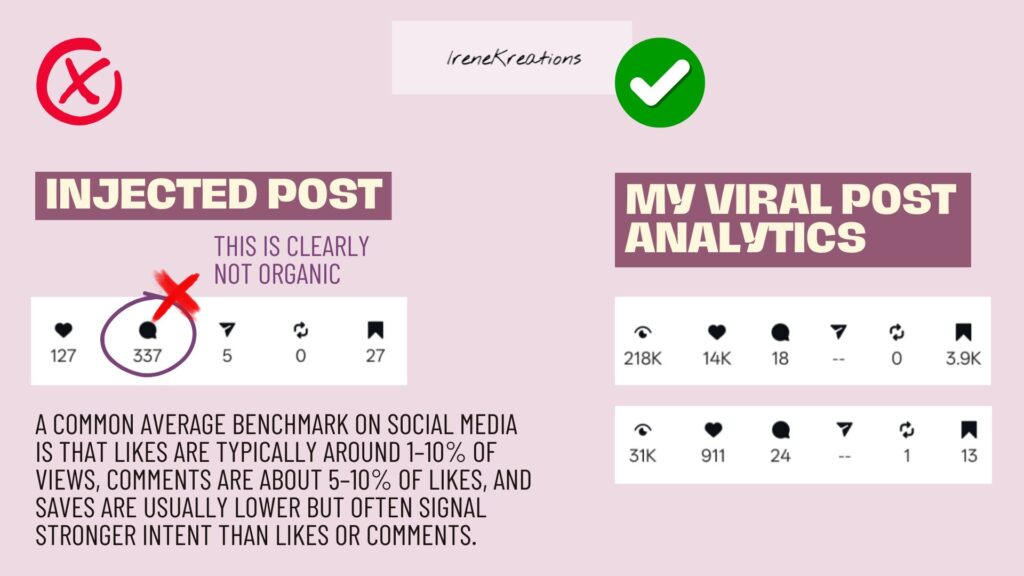
Recently, something strange happened to one of my collaboration posts with a big brand. Overnight, my content post suddenly received a huge spike of comments. The timing itself already felt odd. When I checked in the morning around 9am, most of the comments showed they were posted “9 hours ago,” meaning they came in during the middle of the night, and came in altogether at one go.
What made it more suspicious was this: out of all my posts, it happened specifically on the branded collaboration content.
The post itself was not viral. Reach and engagement patterns were relatively normal before that sudden spike. And honestly, even people outside the marketing and influencer industry can usually tell when engagement looks unnatural. When one particular post suddenly receives dramatically more comments than everything else — without matching reach or virality — it becomes noticeable.
The unfortunate reality is that situations like this can create misunderstandings.
Brands may assume creators are artificially boosting engagement for their content. Audiences may question authenticity. Other creators may silently judge. Yet sometimes, the creator themselves may have absolutely nothing to do with it.
After speaking with several influencer friends, I realised this issue is more common than it seems. Some encounter sudden spikes in followers, while others notice fake likes or irrelevant comments appearing unexpectedly. It can even happen during campaigns, giveaways, or collaborations with larger brands. Ultimately, it’s not something creators can fully control—especially when external parties may intentionally interfere, though hopefully that isn’t the case.
1. What this phenomenon usually is
What many creators experience is a form of inauthentic engagement injection—typically delivered through:
- Bot networks
- Low-cost engagement farms
- Micro-task “click farms”
- Mass account interaction services sold on black/grey digital marketplaces
These services can be purchased to:
- Inflate engagement metrics
- Create the illusion of virality
- Disrupt competitor credibility
- Trigger algorithmic signals artificially
This falls under what is commonly described as blackhat social media manipulation, or at minimum platform-policy-violating inauthentic engagement.
2. Why you might see “India audience” specifically
This is not about the country itself—it’s about supply and cost efficiency in engagement markets.
Large-scale engagement services often source accounts from regions where:
- Account creation costs are low
- Automation is easier to scale
- Click-farm labor is widely available
- Bulk engagement packages are cheaper
As a result, creators may see clusters of activity from:
- India
- Bangladesh
- Indonesia
- Pakistan
- Vietnam
This is a structural byproduct of the engagement industry, not necessarily a targeted demographic statement.
3. Why it happens across multiple platforms
When you see this behavior on more than one platform (for example Instagram + TikTok + Facebook), it usually indicates:
- A single service provider running multi-platform bots
- Or coordinated “engagement packages” sold as bundles
- Or someone attempting to create a broader “visibility distortion” around your brand
This is more serious than isolated spam because it suggests systematic manipulation rather than random noise.
4. How to identify inauthentic engagement patterns
Creators should look for a combination of signals:
Audience behavior signals
- Sudden follower spikes without content virality
- Comments that are generic (“Nice”, “Good post”, emojis only)
- Repetitive phrasing across many accounts
- Accounts with no profile depth or suspicious usernames
Timing signals
- Large bursts occurring overnight
- Engagement concentrated within short time windows
Geographic clustering
- Sudden shift in audience insights toward one region that does not match your usual audience base
Cross-platform repetition
- Similar patterns appearing simultaneously across different accounts
5. Does this harm your account?
Usually, the impact depends on severity.
Potential risks:
- Audience quality dilution (lower relevance signals)
- Reduced engagement rate (if fake followers increase denominator)
- Confusion in analytics
- Temporary algorithm misinterpretation
What it usually does NOT do:
- It rarely “kills” an account outright
- It does not permanently damage reach if handled properly
- Platforms often filter bot activity retroactively
6. What creators should do immediately
A. Do NOT panic-delete everything
Mass deletion can sometimes:
- Trigger further algorithm instability
- Remove legitimate engagement mixed in
B. Audit engagement patterns
Look at:
- Follower growth timeline
- Comment origin clustering
- Post-level anomalies
C. Remove obvious spam accounts gradually
- Block or restrict suspicious profiles
- Use platform “remove follower” tools where available
D. Strengthen content signals
Focus on:
- Real engagement (saves, shares, meaningful comments)
- Audience-relevant content consistency
- Community interaction (replying to real users)
7. Long-term protection strategy
Creators and brands should adopt:
1. Engagement hygiene checks
Regularly review:
- Follower quality
- Comment authenticity
- Audience geography shifts
2. Brand reporting readiness
Keep documentation of:
- Sudden spikes
- Screenshots of anomalies
- Timeline of events
This helps if you need to:
- Report coordinated inauthentic behavior to platforms
- Explain anomalies to brand partners
3. Avoid over-optimizing for vanity metrics
Focus on:
- Conversion-based metrics
- Saves, shares, DMs
- Qualified engagement
8. Key mindset shift for creators
A sudden wave of irrelevant foreign engagement is usually noise, not narrative.
It does not automatically mean:
- Your content is compromised
- Your brand is being destroyed
- Or that a competitor is definitively targeting you
But it does mean:
- Your account has likely entered a visibility threshold where bot systems begin to detect and test it
Final takeaway
What you experienced fits into the broader category of inauthentic engagement manipulation, often associated with blackhat or greyhat social media practices.
A final note from lived experience (what many creators are quietly noticing)
And in some cases, it may not even be done to “help” the creator. It can also be used to disrupt algorithm patterns, damage credibility, or create suspicion around a collaboration.
What made my situation even stranger was that later on the same day, another social media platform of mine experienced something similar. A post related to the same brand although non-collaboration post, suddenly saw unusual likes being added. Again, not across all posts. Just that specific that particular brand I worked with content.
The difficult thing about being a content creator today is that people often only see the visible outcome — follower counts, engagement numbers, collaborations — but not the amount of invisible things happening behind the scenes.
Algorithms already fluctuate unpredictably. Organic reach is already difficult enough to maintain. Creators already spend hours planning, filming, editing, writing captions, responding to communities, and building trust with audiences organically. When suspicious engagement suddenly appears on your content, it can feel frustrating because it interrupts something you worked hard to grow authentically.
✧⭒✦✧⭒✦◇ Get Social Media | Branding | Marketing | Content Strategy Support in Singapore ✦⭒✧✦⭒✧
You can start in a way that feels more comfortable:
1. Join the Kreators Community (Free)
A supportive, non-transactional space where creators and business owners come together to learn, share, and grow.
It’s not about hard selling or competition — it’s more like a kampung-style environment where people:
-Exchange ideas and experiences
-Learn from Irene on the ground in a practical content creation session
-Build genuine connections with other creators & business owners
The focus is on growing together, not performing alone.
👉 [Join Kreators Community]
2. Explore Self-Study E-Books
If you prefer to process things at your own pace, IreneKreations E-books are designed to help you:
-Think clearer about your content and positioning (for a specific niche)
-Understand why you’re stuck (not just what to do)
-Build your own structure without overwhelm
👉 [Browse Growth Hacks E-Books Library]
3. Follow My Telegram Channel (Free Tips & Insights)
If you’re still observing and learning, this is a good place to start.
I regularly share:
-Practical content and branding insights
-Realtime Tips or Customer’s Proven Case Study
-Real thoughts behind strategy (not just surface tips)
-Observations from real business and creator experiences
-At times, leveraging AI for content marketing tips
👉 [Join IreneKreations Telegram Channel]
4. Subscribe to My Email List (Free Insights)
If you prefer something simple, you can join my mailing list.
This is where I share:
-Deeper breakdowns of Marketing knowledge and experience sharing
-Insights I don’t always post on social media
-Practical reflections to help you think more clearly about your direction
It’s designed for people who want steady clarity over time, not just quick tips.
👉 [Subscribe to Email List]
You don’t have to figure everything out alone.
But you also don’t have to rush your process.
Whether you prefer:
-Talking things through
-Learning at your own pace
-Getting small consistent insights
-Or simply observing for now
There’s a space for you here, built and supported by IreneKreations.