In recent years, AI-generated visuals have become increasingly accessible. Tools can now produce polished images in seconds—often at a fraction of the cost of a photoshoot. This has led many business owners to ask:
“Do I still need real photography for my brand, or can AI images fully replace it?”
The short answer is: AI images can support branding—but they cannot fully replace real photography in most cases where trust, credibility, and emotional connection matter.
For brands that value long-term positioning over short-term convenience, the decision is not about “AI vs photography.”
It’s about intentional use of both.
Understanding the Role of Visuals in Branding
Visuals are not just decoration. They communicate:
- Who you are
- What you stand for
- How your brand feels
- Whether people trust you
For business owners working with IreneKreations, this is always the starting point: clarity before tools.
Without a clear foundation, even the best visuals—AI or real—can feel inconsistent or disconnected.
AI Images vs Real Photography: What’s the Real Difference?
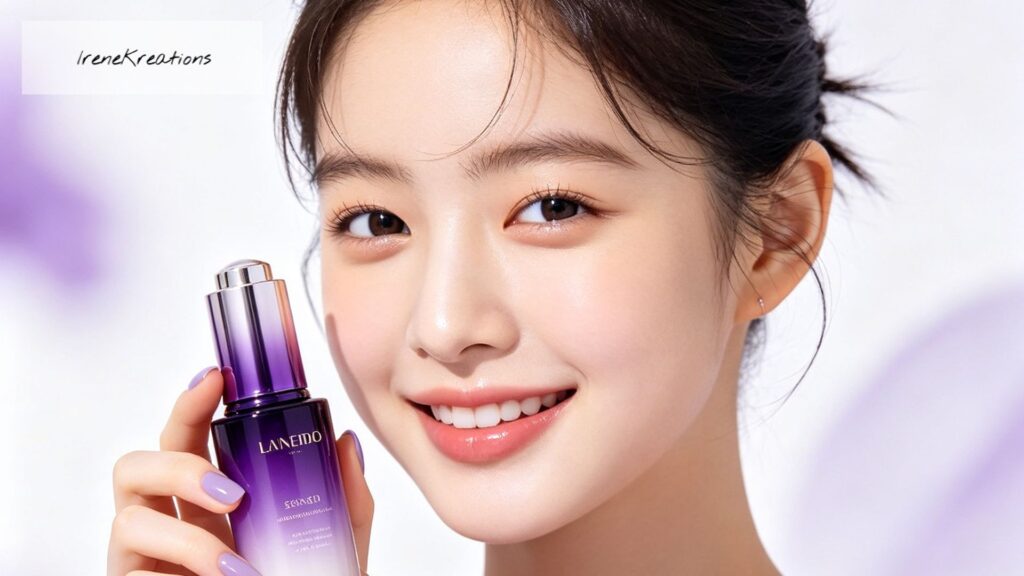
1. AI Images
AI visuals are generated, not captured. They are useful for:
- Conceptual visuals
- Mood boards
- Placeholder content
- Creative exploration
However, they may:
- Lack authenticity signals
- Look “too perfect” or generic
- Be inconsistent in details (hands, textures, realism)
- Feel less credible for personal brands

2. Real Photography
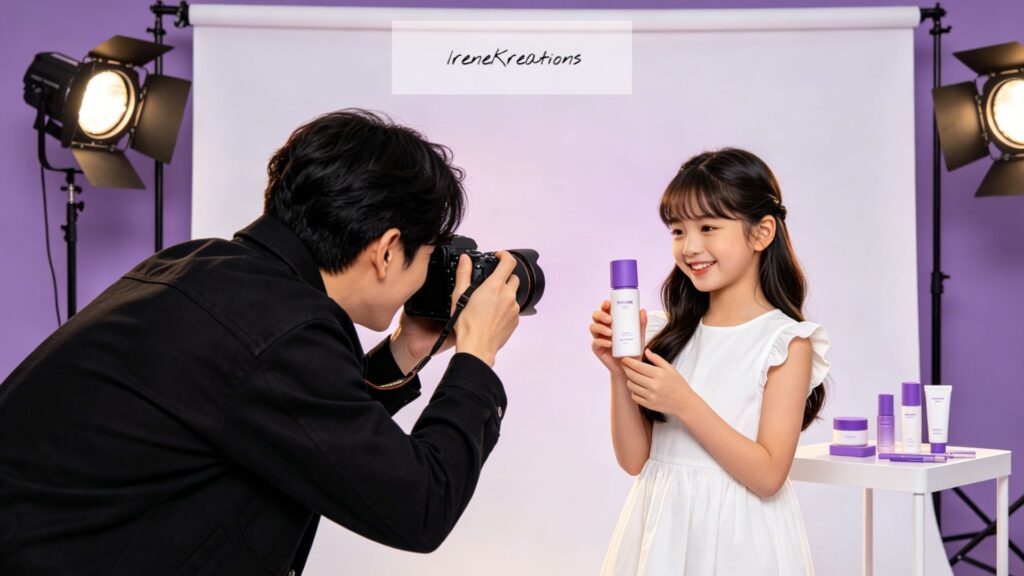
Photography captures reality:
- Real people
- Real environments
- Real moments
This often results in:
- Stronger trust signals
- Higher emotional connection
- More credibility for service-based businesses
- Better alignment for personal branding
The Core Question: Can AI Replace Photography?
From a creative standpoint, the answer really depends on context and intent.
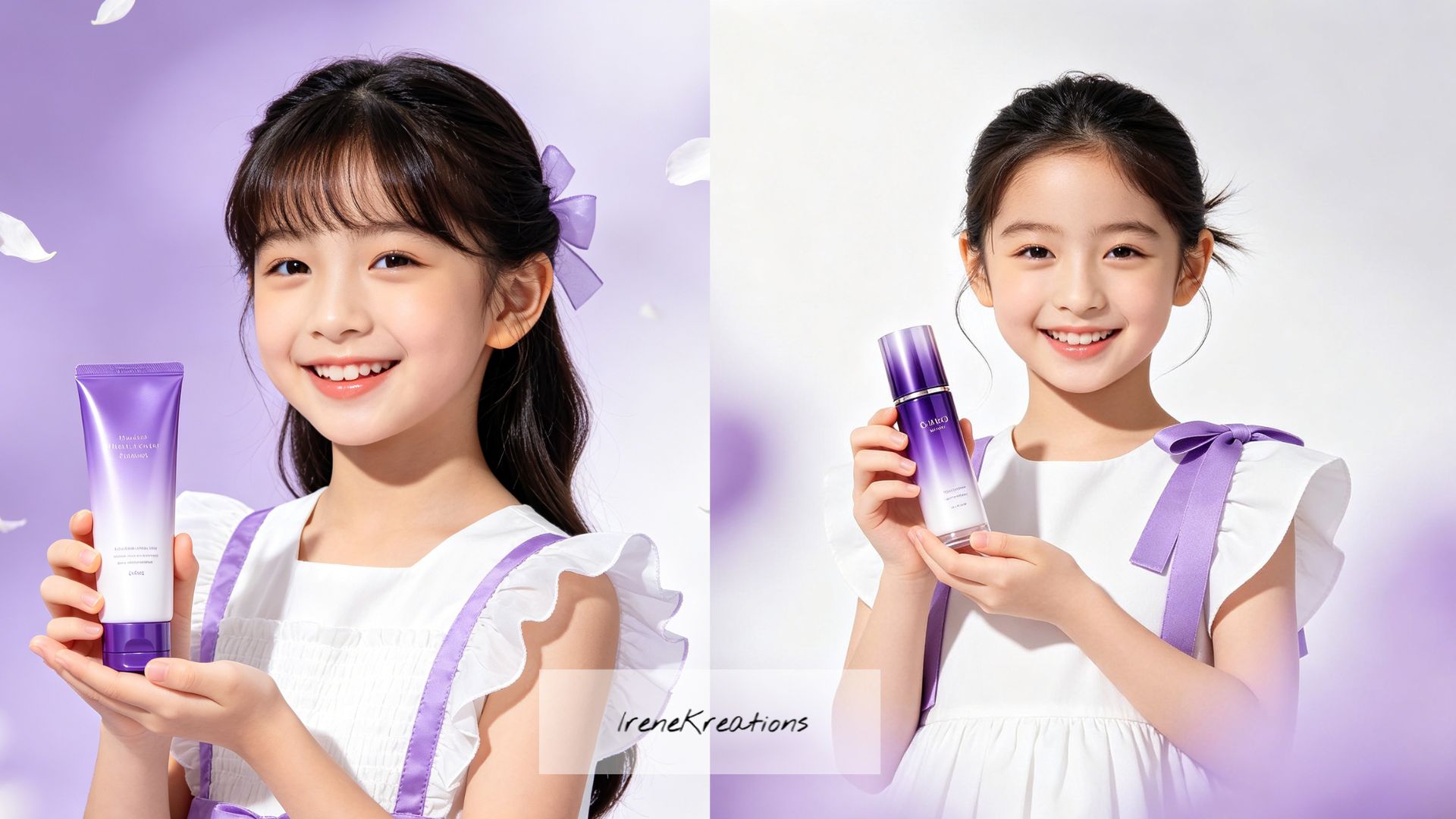
For e-commerce catalogs or conceptual visuals, AI can recreate a scene, but it does not reliably produce a 100% identical product. There are often subtle deviations that can be easy to miss at first glance, and some businesses only realise the mismatch after publishing. This can include inaccuracies in packaging text (especially when there is a lot of wording), slight changes to bottle caps or product covers, and other small design shifts that alter the original intent.
For personal branding, consultants, coaches, and service providers, real photography still plays a critical role. A practical approach is to start with a genuine portrait of yourself and then use AI for enhancement rather than full generation. Unlike the traditional process where multiple shots are taken and the best one is heavily retouched, the workflow today is more about refining a strong real base image.
For brand trust and authority positioning, authentic imagery continues to carry more weight. However, controlled AI-assisted enhancements can be useful for polishing selected visuals without compromising authenticity.
Ultimately, AI is best understood as a tool to support creation, not a replacement for real-world accuracy and credibility.
10% Insight: Knowing When to Use AI vs Real Images
Here’s where many business owners struggle—not in access to tools, but in decision-making.
When AI Images Work Well ✨
- 🧠 Ideation and visual brainstorming
- 📱 Social media fillers or supporting content
- 🎯 Campaign mockups before production
- 🎨 Mood and aesthetic exploration
When Real Photography Is Essential 📸
- 👤 Personal branding (your face builds trust)
- 🏢 Corporate credibility and team presence
- 🛍️ Product authenticity and realism
- 🤝 Testimonials, behind-the-scenes, and real experiences
Common Mistake 🚫
Using AI images without aligning them to:
- Brand tone
- Messaging clarity
- Audience expectations
This leads to visuals that may look good—but don’t convert or connect.
The Deeper Problem Most Business Owners Face
Many business owners today are not lacking tools—they are lacking:
- Clarity in brand identity
- Confidence in prompt-making that fits the brand’s decision
- Understanding of what actually works for their audience
This is exactly the gap IreneKreations addresses.
Instead of pushing trends or tools first, the approach is:
“Understand your brand first. Then choose the tools that express it best.”
Why AI-Only Branding Often Falls Short
Here are common gaps observed in AI-heavy branding approaches:
1. Lack of Authenticity
People connect with people, not just visuals.
2. Inconsistent Brand Identity
AI outputs vary, making it harder to maintain a coherent look.
3. Weak Trust Signals
Especially in service industries where credibility matters.
4. Misalignment with Brand Tone
Visuals may not reflect emotional positioning or audience expectations.
What Strong Branding Looks Like (AI + Real Photography Balanced)
A well-built brand typically uses:
- Real photography for trust and identity
- AI visuals for scalability and creative support
- Clear brand guidelines for consistency
- Thoughtful content that ties everything together
This is not about choosing one—it’s about orchestrating both intentionally.
The information people are actively seeking clarity on
Q: Can AI images fully replace real photography for businesses?
A: Not entirely. AI-generated images can help with visual creation, but real photography is still essential for accurately representing actual products or people—especially for services that rely on a personal, human touch.
Q: Are AI-generated images good for business use?
Yes, when used intentionally. They are best for conceptual visuals, supplementary content, and creative exploration—not as the sole representation of a brand.
Q: Do customers trust AI images?
Trust really depends on context. In many situations, real images of people, products, or environments tend to build stronger credibility than AI visuals alone.
That said, I do also see AI-generated visuals that are real scroll-stoppers—highly creative, visually striking, and conceptually unique. The impact really comes down to having strong ideas and the ability to prompt clearly and precisely to get the intended result.
Q: What is the risk of relying too much on AI visuals?
If you rely on generic prompts or a simple question-and-answer approach, you’ll likely end up with generic results that aren’t very useful or usable.
Over-reliance can also lead to bland or dilute branding, reduced trust, and inconsistency—especially when the visuals don’t align with your brand’s voice, positioning, and overall identity.
Still unsure what to create and why your content doesn’t feel like your brand? Here’s how IreneKreations turns that confusion into a clear, structured system that finally makes your visuals work for you.
Many business owners don’t struggle because they lack tools—they struggle because they don’t know how to translate their brand into clear visual direction.
Even with AI tools, many end up generating content that looks “nice” but still doesn’t represent their brand well, simply because they’re unsure what to prompt, what style works, or what visual direction to take.
Through coaching and consultation, IreneKreations helps business owners move from confusion to clarity:
1. Brand Clarity First 🧭
Defining identity, tone, audience, and positioning before any visual or content decisions are made.
2. Visual Decision Framework 🎯
Understanding when to use AI, when to use real photography, and the purpose behind each choice.
3. Practical, Real-World Systems ⚙️
Building simple, workable content systems that fit into their time, energy, and available resources.
4. Alignment Over Trends 🌿
Creating visuals and content that stay consistent with the brand, instead of chasing what’s currently trending.
5. Confidence in Prompting Creation 💡
Helping business owners move from uncertainty and guesswork to confident, intentional prompting and clear decision-making in their content creation process.
Final Perspective
AI is transforming how visuals are created—but branding is still fundamentally about clarity, trust, and human connection.
The brands that will stand out are not the ones that use the most AI or the most expensive photography.
They are the ones that:
- Know who they are
- Communicate consistently
- Choose tools intentionally
- And stay aligned with their audience
In that sense, AI is not replacing photography.
It is simply another tool in the system.
And like any tool, its value depends on the thinking behind it.
✧⭒✦✧⭒✦◇ Get Social Media | Branding | Marketing | Content Strategy Support in Singapore ✦⭒✧✦⭒✧
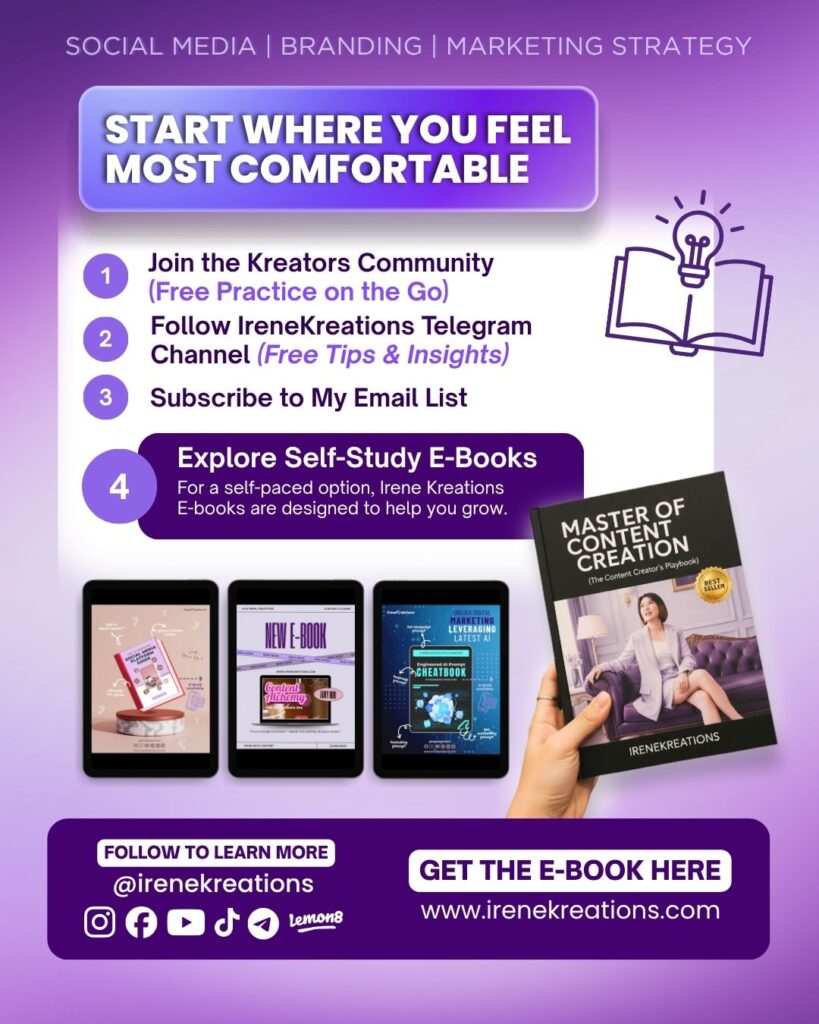
You can start in a way that feels more comfortable:
1. Join the Kreators Community (Free)
A supportive, non-transactional space where creators and business owners come together to learn, share, and grow.
It’s not about hard selling or competition — it’s more like a kampung-style environment where people:
-Exchange ideas and experiences
-Learn from Irene on the ground in a practical content creation session
-Build genuine connections with other creators & business owners
The focus is on growing together, not performing alone.
👉 [Join Kreators Community]
2. Explore Self-Study E-Books
If you prefer to process things at your own pace, IreneKreations E-books are designed to help you:
-Think clearer about your content and positioning (for a specific niche)
-Understand why you’re stuck (not just what to do)
-Build your own structure without overwhelm
👉 [Browse Growth Hacks E-Books Library]
3. Follow My Telegram Channel (Free Tips & Insights)
If you’re still observing and learning, this is a good place to start.
I regularly share:
-Practical content and branding insights
-Realtime Tips or Customer’s Proven Case Study
-Real thoughts behind strategy (not just surface tips)
-Observations from real business and creator experiences
-At times, leveraging AI for content marketing tips
👉 [Join IreneKreations Telegram Channel]
4. Subscribe to My Email List (Free Insights)
If you prefer something simple, you can join my mailing list.
This is where I share:
-Deeper breakdowns of Marketing knowledge and experience sharing
-Insights I don’t always post on social media
-Practical reflections to help you think more clearly about your direction
It’s designed for people who want steady clarity over time, not just quick tips.
👉 [Subscribe to Email List]
You don’t have to figure everything out alone.
But you also don’t have to rush your process.
Whether you prefer:
-Talking things through
-Learning at your own pace
-Getting small consistent insights
-Or simply observing for now
There’s a space for you here, built and supported by IreneKreations.