
Because in today’s world, content isn’t just “marketing” anymore—it’s cognitive overload.
Admit it: social media, branding, content creation, and digital marketing feel like too much for most business owners and teams today. There are too many platforms, too many trends, too many “must-do hacks,” and not enough clarity on what actually works.
And yet, expectations keep rising—post daily, go viral, build a brand voice, run ads, write captions, design visuals, understand algorithms… all at once.
This is exactly why training your marketing team with Design Thinking is no longer optional—it is strategic survival.
Design Thinking brings structure into chaos. It replaces guesswork with empathy-led systems. And most importantly, it helps teams create marketing that actually feels right to both the business and the audience.
In Singapore’s competitive business world, marketing plays a key role in helping companies stand out. To stay ahead, businesses need fresh, creative strategies that truly connect with their customers. One powerful method that can help your marketing team achieve this is Design Thinking.
Design Thinking is all about understanding the problems customers face and solving them with creativity, empathy, and collaboration. By using this approach, your marketing team can create campaigns that really speak to your audience and help your business grow.
In this article, we’ll explain why training your marketing team with Design Thinking is essential for success in Singapore’s fast-paced digital world.
Short-form reality check (data-backed insights)
- 70% of companies say delivering consistent customer experience is their top priority, but only a fraction feel they execute it well (McKinsey & Company insights).
- Design-led companies outperform the S&P 500 by up to 200% over 10 years (McKinsey Design Index).
- 80% of organizations using Design Thinking report improved user satisfaction and faster innovation cycles (IBM Design Thinking framework findings).
- Companies that adopt structured creative processes see higher alignment between marketing, product, and branding teams, reducing rework and inconsistency (Adobe State of Create report).
The pattern is clear: creativity without structure leads to burnout. Structure without creativity leads to bland marketing. Design Thinking is the bridge.
Why marketing teams are struggling (the real problem)
Most marketing breakdowns don’t come from lack of talent—they come from lack of shared thinking systems.
Here’s what usually happens:
- Content feels inconsistent across platforms
- AI-generated content feels “off-brand” or generic
- Branding exists in theory but not in execution
- Teams rely on trends instead of intention
- Everyone is “creating,” but no one is aligning
For many business owners, especially solopreneurs and small teams, marketing becomes emotional exhaustion rather than strategic growth.
So, why Train Your Marketing Team with Design Thinking?
Training your marketing team with Design Thinking is a great way to help them create campaigns that focus on the customer, bring in new ideas, and stay flexible. Here’s why this approach is so important in Singapore:
- Understanding Your Customers: Singapore is a diverse and fast-moving market. Customer-focused marketing is crucial, and Design Thinking teaches your team to understand customers’ emotions, challenges, and needs. This human-centered approach helps create campaigns that not only grab attention but build lasting relationships.
- Encouraging Creative Ideas: Singapore’s business market is full of competition, so companies need to be innovative. Creative marketing is important, and Design Thinking pushes teams to come up with fresh ideas that stand out and make an impact.
- Collaboration Leads to Better Campaigns: To make your marketing efforts truly effective, you need input from various departments, such as sales, customer service, and product development. Design Thinking encourages this kind of team collaboration, which leads to more well-rounded and successful campaigns.
- Quick Testing and Refining: In today’s fast-changing Singapore market, marketing agility is key. Design Thinking promotes quick testing of ideas, which means your team can gather feedback and adjust their strategies to improve results faster.
- Clear and Simple Communication Singapore is a multicultural society, and businesses need to communicate clearly to connect with a wide range of people. Design Thinking helps your marketing team craft simple, effective messages that appeal to different audiences and avoid confusion.
Why Design Thinking Matters in Marketing
- 80% of businesses acknowledge that human-centered approaches lead to more innovative campaigns.
- Teams trained in Design Thinking produce faster, more creative solutions that reduce wasted effort by 25–30%.
- Campaigns grounded in empathy see higher engagement — emotional connection drives more than 60% of purchase decisions.
Design Thinking equips your team with empathy, problem-solving skills, and structured experimentation — essential in a landscape cluttered with AI tools, trend-chasing, and inconsistent branding.
Key Principles of Design Thinking for Marketing Teams in Singapore
Let’s dive into how Design Thinking can transform your marketing approach in a Singapore context and enhance your customer experience:
1. Focus on Human Values
Marketing in Singapore is about more than just selling a product. It’s about understanding the human element—what motivates customers, what challenges they face, and what they value most. By focusing on empathy, marketing teams can create campaigns that address the real needs of the target audience.
How to Apply:
- Conduct customer research through surveys, focus groups, and social media feedback.
- Use empathy maps to understand consumer pain points.
- Craft marketing campaigns that solve specific customer problems, like stress relief or financial well-being, which resonate with local concerns.
2. Radical Collaboration for Innovative Campaigns
Design Thinking emphasizes the power of collaborative marketing. By including diverse team members from different departments, you can generate ideas that cover multiple aspects of customer needs. This approach ensures that campaigns are well-informed and multifaceted.
How to Apply:
- Bring together team members from marketing, sales, product development, and customer service to brainstorm.
- Use cross-functional workshops to inspire creative problem-solving.
- Encourage diverse viewpoints to create more inclusive campaigns that appeal to a wide range of consumers in Singapore.
3. Embrace Experimentation and Testing
The Singapore market is fast-changing, so marketing strategies must be agile. Design Thinking encourages marketing experimentation, where teams test different ideas, gather data, and refine their campaigns based on real feedback.
How to Apply:
- Use A/B testing for digital ads, emails, and landing pages.
- Experiment with various content formats like videos, blog posts, and interactive quizzes.
- Measure results continuously and make adjustments to campaigns based on performance.
4. Show, Don’t Just Tell
In today’s digital age, storytelling is everything. Instead of simply telling your audience what your product does, show them how it enhances their life. Whether through video content, customer testimonials, or case studies, storytelling creates an emotional connection that drives consumer trust and engagement.
How to Apply:
- Use visual content like infographics and short videos that demonstrate your product in action.
- Share customer stories and experiences to highlight the impact of your product or service.
- Create engaging narratives on social media platforms, aligning with what your Singapore audience cares about.
5. Stay Organized and Follow the Process
While creativity is vital, marketing teams need a clear process to execute their campaigns effectively. Design Thinking provides a structured approach, from idea generation to prototyping to testing. This ensures that the team stays on track while remaining flexible to new insights.
How to Apply:
- Use project management tools to track progress through each stage of the campaign.
- Break down the campaign into smaller, manageable steps, ensuring that each task aligns with customer insights.
- Set clear goals and metrics to measure success, making it easier to adjust campaigns as needed.
6. Craft Clarity in Your Messaging
Clear, concise communication is key to success in a diverse market like Singapore. Design Thinking helps marketing teams craft messaging that is simple, actionable, and relevant. Clear messaging ensures that your audience understands your value proposition quickly, driving better engagement.
How to Apply:
- Focus on simplified messaging that resonates with local cultural values.
- Avoid jargon—speak the language your customers use.
- Ensure your marketing materials, from websites to brochures, deliver your message without confusion.
7. Take Action and Make Changes
Design Thinking isn’t just about planning—it’s about action. It encourages teams to implement ideas quickly, test them, and refine them based on feedback. In the fast-paced Singapore market, this ability to move quickly and iterate is crucial for staying ahead.
How to Apply:
- Start with small-scale tests and collect feedback from your audience.
- Continuously improve your campaigns based on real-world data, rather than waiting for perfection.
- Prioritize actionable insights and focus on measurable results, like customer acquisition or engagement rates
Summing up
4 Core Benefits of Training Your Team in Design Thinking
1-Empathy-Driven Campaigns
Design Thinking ensures marketing starts with a deep understanding of your audience — what they feel, think, and want. This insight reduces misaligned content and improves ROI.
2-Structured Creativity
It balances creativity and strategy, giving teams freedom to innovate while following a process that drives results.
3-Smarter Use of Tools
Tools are only as effective as the strategy behind them. Teams trained in Design Thinking know which tools to use, when, and how, avoiding wasted subscriptions and effort.
4-Consistency & Brand Alignment
By embedding empathy and structured problem-solving, marketing outputs remain aligned with your brand identity — even across different teams and channels.
How IreneKreations helps bridge this gap
At IreneKreations, we don’t just teach content creation—we help build thinking systems behind content.
Instead of forcing business creators and marketers to “keep up with trends,” we focus on:
- Building brand clarity before content execution
- Training structured creative workflows using Design Thinking
- Helping teams translate identity into visual and messaging systems
- Creating repeatable frameworks so content is no longer random
For business owners and teams, this means:
- Less guessing, more alignment
- Less burnout, more clarity
- Less noise, more intentional branding
Because good marketing is not about doing more—it is about thinking better before doing anything.
People are also asking online:
Q: What is Design Thinking in marketing?
A: Design Thinking is a human-centered, iterative approach to problem-solving that combines creativity, strategy, and empathy to produce solutions that resonate with your audience.
Q: Why is Design Thinking better than traditional marketing training?
A: Traditional training often teaches tools or trends without context. Design Thinking teaches how to apply strategy with empathy, ensuring campaigns are effective and consistent.
Q: How can small teams in Singapore implement Design Thinking?
A: Start with focused workshops, structured brainstorming, and weekly iterative campaigns. Tools like Google Workspace or Trello can support workflow clarity.
Q: Can Design Thinking help small business owners?
A: Yes — structured processes reduce overwhelm and provide clear steps, enabling focused creativity without losing personal style.
Q: How long does it take for a marketing team to see results after Design Thinking training?
A: Many teams see measurable improvements in campaign effectiveness within 6–8 weeks, with long-term gains in consistency and engagement.
Q: Which Singapore businesses benefit most from Design Thinking marketing training?
A: SMEs, startups, and freelancers looking to differentiate their brand and build structured, creative campaigns while maintaining identity.
Q: What overlooked advantage does Design Thinking provide beyond creativity?
A: It helps teams anticipate audience needs before trends appear, creating campaigns that lead rather than follow — a key differentiator for Singapore creators.
Q: Can AI replace marketing teams if Design Thinking is used?
A: No. AI can generate content, but Design Thinking ensures the content is emotionally aligned, strategic, and brand-consistent.
Conclusion: Why this shift matters now
Marketing is no longer about producing content faster.
It is about building systems that help people think clearly before they create anything.
Design Thinking gives marketing teams something most of them are missing right now—a shared language for creativity, structure for chaos, and intention behind execution.
And for overwhelmed creators, solopreneurs, and business owners, this is the difference between constantly “trying to keep up” and finally building something sustainable.
Not sure how to train your Marketing Team in Design Thinking? Talk to us now!
We can guide you through the process and help your marketing team harness the power of Design Thinking to drive innovative, customer-centric campaigns. Let’s get started on creating a strategy that works for your business in Singapore. Reach out today!
✧⭒✦✧⭒✦◇ Ready to Level Up Your Socials? ✦⭒✧✦⭒✧
Still struggling with messy marketing or feel lost on social media? It’s time to change that. Dive into IreneKreations’ Recommended Social Marketing E-Books — a curated library filled with FREE and premium guides crafted for business owners who want real, lasting results.
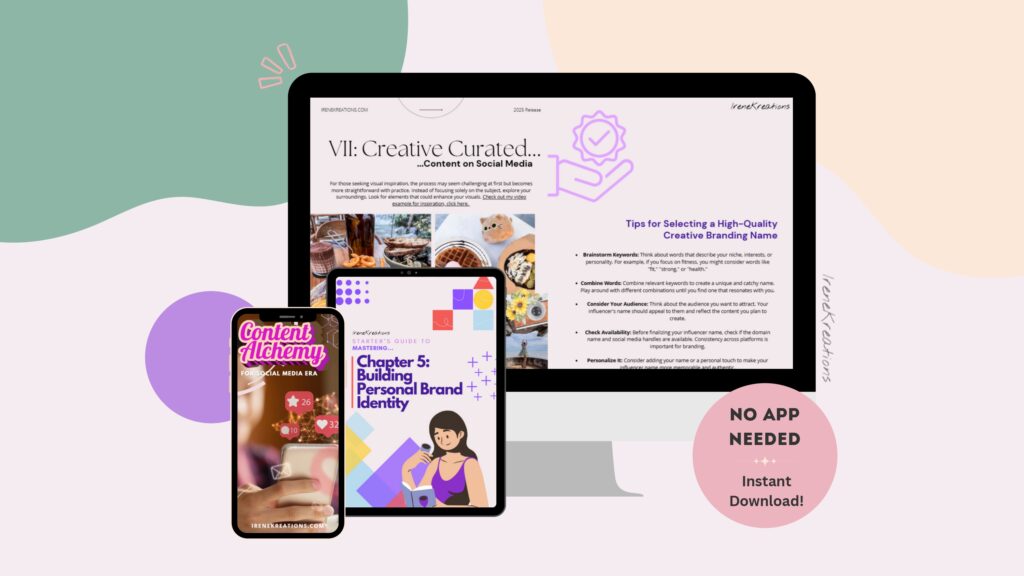
From social media to content strategy and branding, these resources are your shortcut to making marketing finally make sense (and work).
Instant access. Powerful strategies. Business-ready results.