“Your business is more than what it does — it’s why it matters.”
In a world flooded with products, services, and content, the brands that stand out aren’t the ones with the flashiest ads — they’re the ones with a deeper, unmistakable USP (Unique Selling Proposition). As Simon Sinek famously said, “People don’t buy what you do; they buy why you do it.”
For business owners who want consistency, clarity, and brand authority, understanding the difference between an obvious USP and a deeper USP can be the difference between blending in and truly resonating. Recent studies show that brands with a clearly articulated deeper USP see up to 33% higher customer retention and 25% stronger engagement than those relying solely on surface-level differentiation.
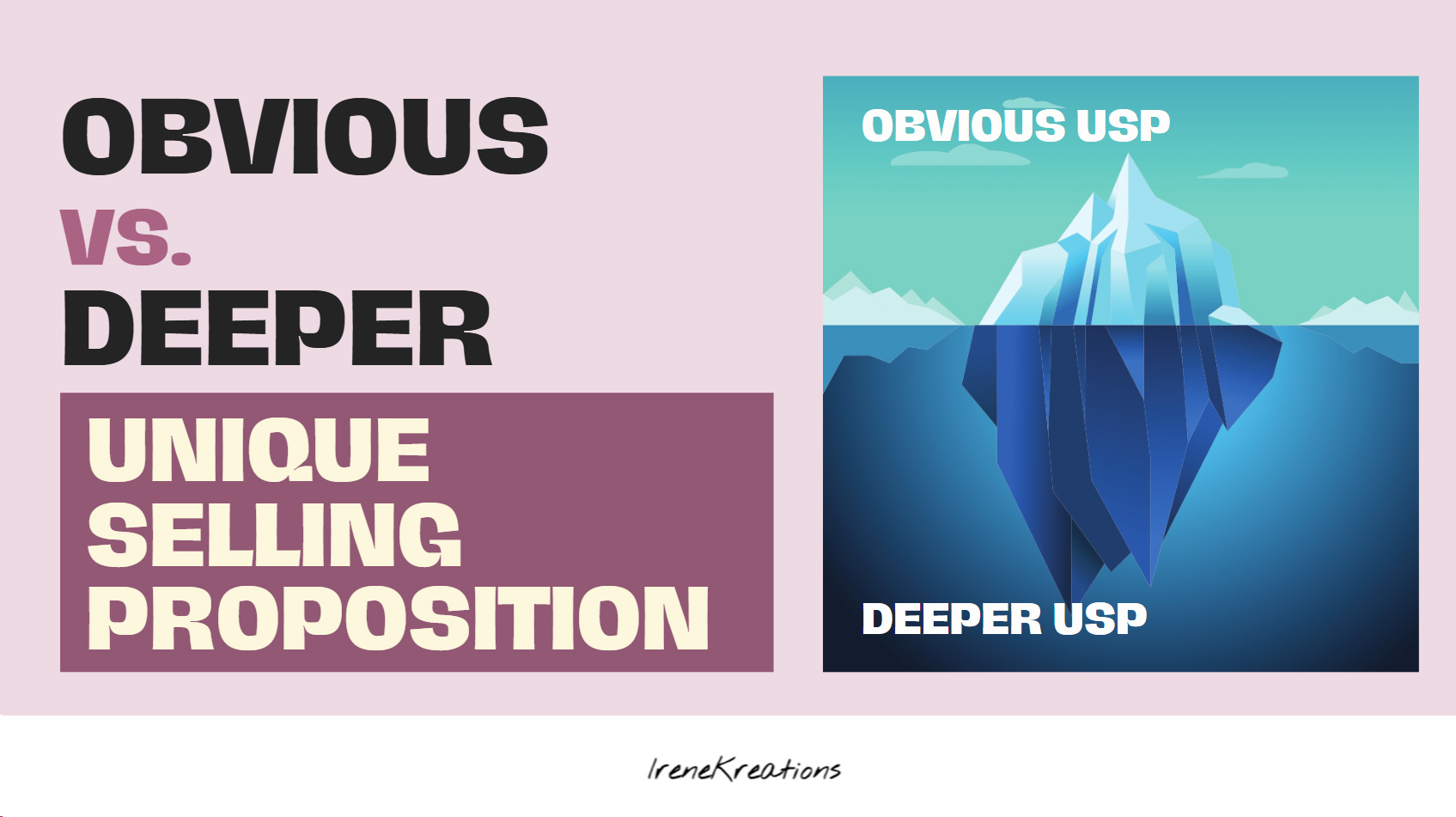
Most businesses stop at the obvious USP—the features of their product or service. But the most powerful brands go deeper, uncovering the emotional impact and transformation they provide.
Obvious vs. Deeper USP: Why It Matters
- Obvious USP: Focuses on surface-level benefits — “I offer fast delivery” or “My product is affordable.” Nearly 70% of consumers report seeing multiple brands with similar claims, making these USPs easy to overlook.
- Deeper USP: Speaks to purpose, values, and transformative outcomes — “I help solopreneurs feel confident and visible online without losing their unique voice.” Consumers connect emotionally with deeper USPs, which drives loyalty and long-term growth.
Why your deeper USP matters: It aligns your messaging with your audience’s true desires, helps your content rank better in search (Google values relevance, authority, and clarity), and positions your brand as a thought leader in your niche.
1. The Obvious USP (Surface-Level)
This is the practical, functional, or technical reason why someone might choose your brand. It usually focuses on:
-Pricing (cheaper, premium, best value)
-Features (organic, handcrafted, fast delivery)
-Availability (convenience, locations, access)
-Quality (better ingredients, durability, customization)
Example: A Fitness Studio
–Obvious USP: “We offer high-energy workout classes with certified trainers.”
–Obvious USP: “Our gym has state-of-the-art equipment and 24/7 access.”
Why It’s Not Enough
These are good selling points, but they don’t create loyalty. Customers don’t buy products; they buy the outcome, the transformation, and the identity shift.
2. The Deeper USP (Emotional & Transformational)
This goes beyond features and taps into the feelings, values, and transformation your brand creates.
Ask your client:
- How do customers feel before and after using your product/service?
- What emotional problem do you solve?
- What identity do your customers want to embody?
Example: The Same Fitness Studio
–Deeper USP: “We help busy professionals rediscover their energy and confidence through movement, so they can show up as their best selves every day.”
–Deeper USP: “More than just a workout—our studio is a supportive community that empowers you to push past limits and embrace a healthier lifestyle.”
Why This Works
A deeper USP makes customers feel emotionally connected to your brand. Instead of just buying a product, they buy into a belief system, a community, or a personal transformation.
How to Identify Your Deeper USP
1. Understand Your Audience at a Core Level
Ask: What do they truly want, not just what they say they need? For your audience and potential client, eg.:
- They want structure and clarity.
- They want consistent content that feels authentic.
- They want branding that reflects their identity, not trends.
2. Analyze Your Obvious USP
Identify what your business already communicates on the surface. For example: “I provide social media coaching” — this is a starting point, but it doesn’t differentiate you.
3. Dig into Deeper Impact
Think about the transformation your service enables:
- Confidence, clarity, and brand consistency
- Smarter workflows without losing identity
- Sustainable online presence that grows with your business
At IreneKreations, we help creators uncover this deeper USP through 1-on-1 coaching and strategic frameworks that translate your core purpose into compelling messaging that resonates online and offline.
4. Express It Clearly
Your deeper USP should be succinct, emotional, and actionable:
Example: “We help business owners structure their content strategy so their unique voice shines online, even amidst the noise.”
Common Mistakes to Avoid
- Relying on generic claims that everyone else uses
- Focusing solely on features, not outcomes
- Ignoring audience emotional triggers and pain points
Summing up:
–List your obvious selling points. (What makes your product/service different functionally?)
–Ask ‘Why does this matter?’ (What’s the emotional benefit behind it?)
–Ask ‘How does this change someone’s life?’ (What transformation does it create?)
–Formula: “We don’t just [obvious USP], we [deeper USP that changes how people feel/live].”
Example: A Bakery
–Obvious USP: “We bake fresh, handcrafted pastries daily.”
–Deeper USP: “We bring people together through nostalgic flavors that remind them of home and happiness.”
Business owners are also asking online:
Q: What is the difference between obvious and deeper USP?
A: Obvious USP highlights surface features (speed, cost), while deeper USP addresses emotional outcomes, transformation, and alignment with audience values.
Q: Why is a deeper USP critical for content creators in Singapore?
A: Singapore creators face a saturated market; a deeper USP helps them stand out, attract loyal followers, and improve content discoverability on platforms and Google.
Q: How do I test if my USP resonates?
A: Share your USP with a small audience, monitor engagement, and ask for feedback — look for emotional connection, clarity, and differentiation.
Q: Can a deeper USP help with SEO and Google ranking?
A: Yes — content that aligns with audience intent, addresses clear pain points, and demonstrates authority is more likely to rank higher.
Q: How do Singapore freelancers use deeper USPs to stand out online?
A: Tailor messaging to local audience nuances, highlight unique local expertise, and align content with search intent keywords like “Singapore personal branding coaching” or “content strategy for freelancers Singapore.”
Q: How can a deeper USP reveal hidden market opportunities?
A: By identifying unmet emotional or structural needs of your audience, you can offer solutions competitors overlook — creating a unique position in a saturated market.
Final Thought
Your Secret Weapon: Market the deeper USP instead of just the obvious one. The deeper USP is what creates loyalty, word-of-mouth, and a strong emotional brand.
Knowing your deeper USP isn’t just marketing — it’s a strategic lens for your entire business. It helps thoughtful creators build confidence, clarity, and structured workflows, while standing out in crowded digital spaces. For creators ready to move beyond the obvious and create meaningful connection, here’s the question:
Are you ready to uncover your deeper USP and transform your business and content strategy into something unforgettable?
✧⭒✦✧⭒✦◇ Get Social Media | Branding | Marketing | Content Strategy Support in Singapore ✦⭒✧✦⭒✧
You can start in a way that feels more comfortable:
1. Join the Kreators Community (Free)
A supportive, non-transactional space where creators and business owners come together to learn, share, and grow.
It’s not about hard selling or competition — it’s more like a kampung-style environment where people:
-Exchange ideas and experiences
-Learn from Irene on the ground in a practical content creation session
-Build genuine connections with other creators & business owners
The focus is on growing together, not performing alone.
👉 [Join Kreators Community]
2. Explore Self-Study E-Books
If you prefer to process things at your own pace, IreneKreations E-books are designed to help you:
-Think clearer about your content and positioning (for a specific niche)
-Understand why you’re stuck (not just what to do)
-Build your own structure without overwhelm
👉 [Browse Growth Hacks E-Books Library]
3. Follow My Telegram Channel (Free Tips & Insights)
If you’re still observing and learning, this is a good place to start.
I regularly share:
-Practical content and branding insights
-Realtime Tips or Customer’s Proven Case Study
-Real thoughts behind strategy (not just surface tips)
-Observations from real business and creator experiences
-At times, leveraging AI for content marketing tips
👉 [Join IreneKreations Telegram Channel]
4. Subscribe to My Email List (Free Insights)
If you prefer something simple, you can join my mailing list.
This is where I share:
-Deeper breakdowns of Marketing knowledge and experience sharing
-Insights I don’t always post on social media
-Practical reflections to help you think more clearly about your direction
It’s designed for people who want steady clarity over time, not just quick tips.
👉 [Subscribe to Email List]
You don’t have to figure everything out alone.
But you also don’t have to rush your process.
Whether you prefer:
-Talking things through
-Learning at your own pace
-Getting small consistent insights
-Or simply observing for now
There’s a space for you here, built and supported by IreneKreations.